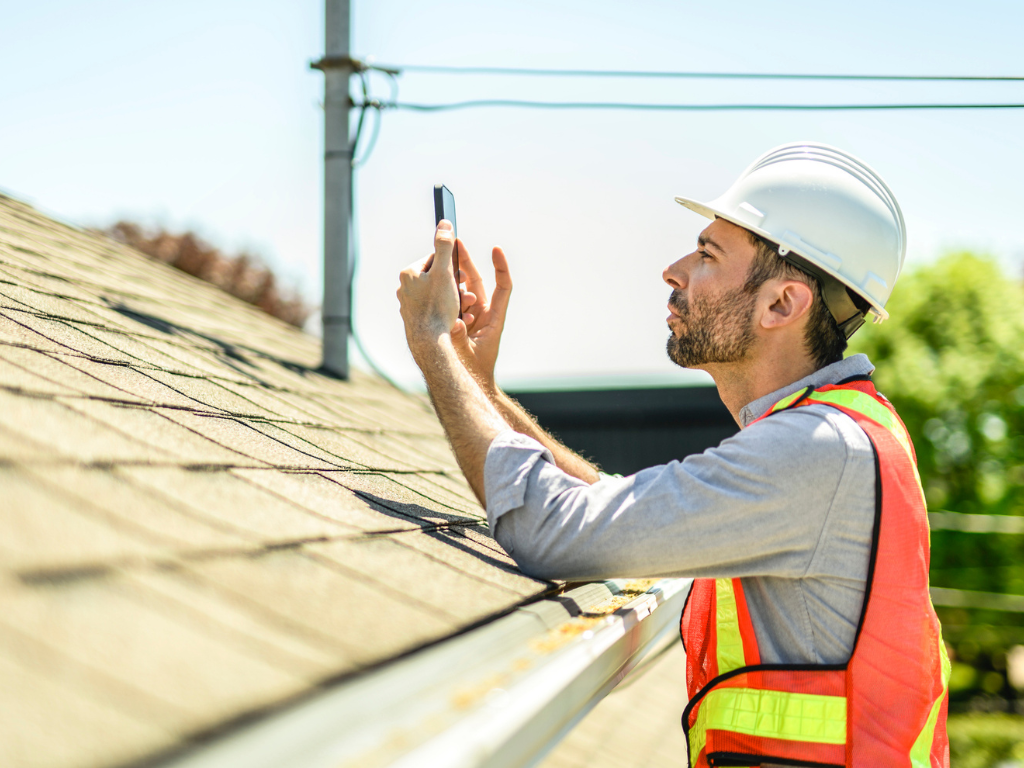
A roofing inspection checklist covers the roof surface, the flashing around every penetration, the gutters and drainage, the attic and roof deck, and the interior ceilings below. A professional roof inspector records the condition of each area with photos and delivers a written report.
Most homeowners never climb onto their own roof, so problems stay hidden until a stain shows up on the ceiling. That is why a professional inspection matters. A trained inspector knows where water sneaks in and which small defects turn into expensive repairs later.
Coastal South Carolina makes the case even stronger. Salt air, high winds, and heavy rain put steady pressure on every roofing material. Knowing what a professional roofer checks helps you ask better questions and understand the report you get back.
What Is a Roofing Inspection Checklist?
A roofing inspection checklist is a standard list of items an inspector reviews on and around your roof. The checklist keeps every visit consistent. Nothing gets skipped, because the inspector works through the same areas in the same order each time.
Why Does a Roof Inspection Checklist Matter?
Small defects cost very little to fix. Large defects cost a lot. A loose piece of flashing can be resealed in minutes. The water damage that same flashing causes over two years can mean a replaced roof deck and new drywall inside the house.
Storm damage adds urgency along the coast. About one in 36 insured homes files a wind or hail property damage claim each year. A documented roofing inspection gives your insurance company a clear record of your roof’s condition before and after a storm.
What Should the Inspector Give You Afterward?
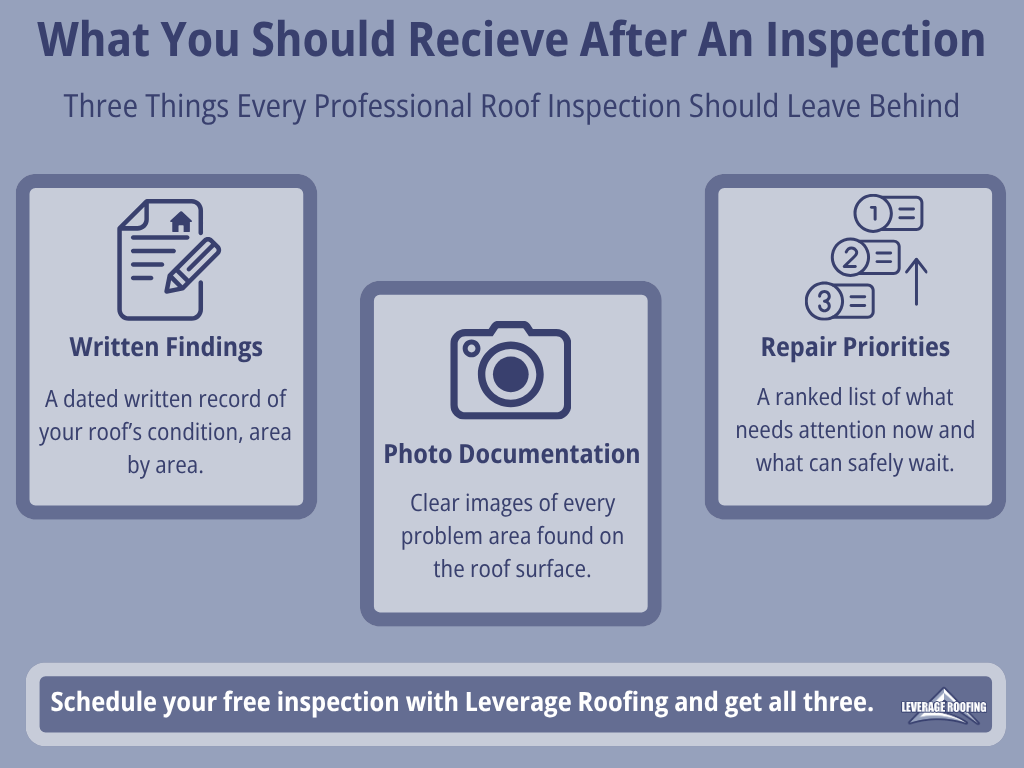
A professional roof inspector should leave you with more than a verbal summary. Ask for these three items every time:
- Written findings: The inspector records every observation on an inspection form, so you have a dated record of your roof’s condition.
- Photos of each problem area: Pictures taken on the roof surface show you what you cannot see from the ground.
- Repair priorities: A good report separates items that need attention now from items you can simply watch.
Many roofing companies now deliver the report as a digital form you can forward straight to your insurance company or your building owners.
What Do Professional Roofers Look For During a Roof Inspection?
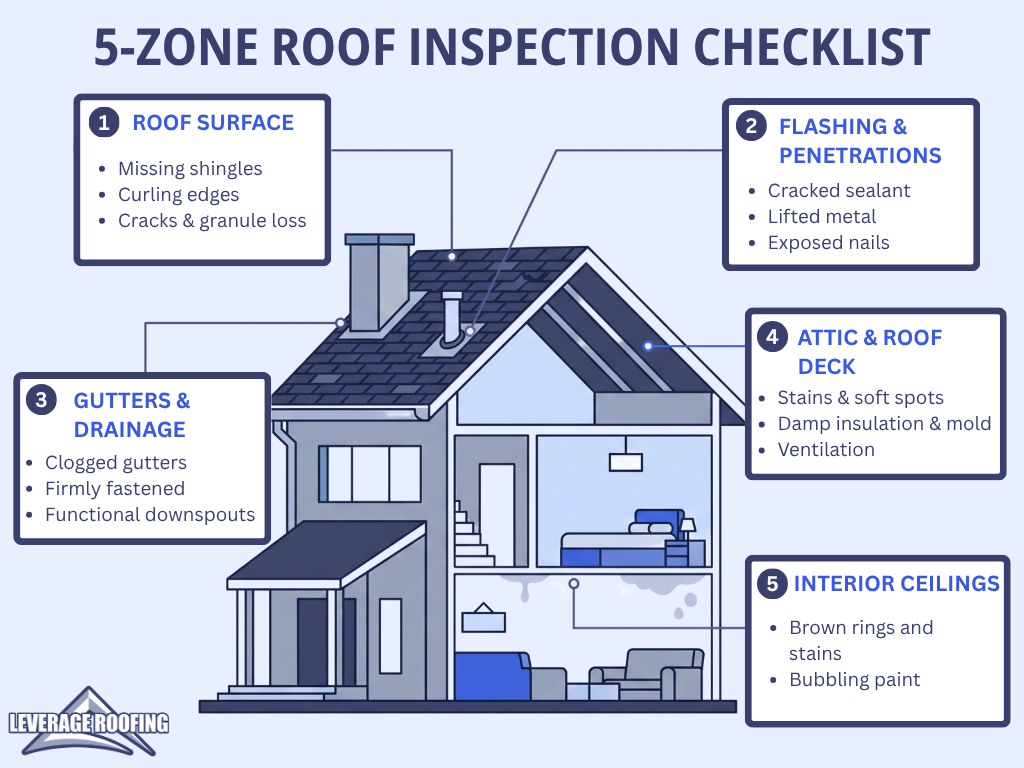
An onsite inspection moves from the outside in. Here is what a roofing contractor checks at each stop along the way.
The Roof Surface
The roof surface tells the inspector how much life the roofing material has left. On an asphalt shingle roof, the inspector looks for missing shingles, curling edges, cracks, and bald patches where granules have washed away. Granules collecting in the gutters are one of the clearest signs of age.
On a metal roof, the checklist shifts to fasteners, seams, and coating. Loose screws and lifted seams let water travel under the panels. Rust along the edges points to salt exposure, which moves fast this close to the ocean.
Flashing, Vents, and Penetrations
Most roof leak problems start at a penetration rather than in the middle of a field of shingles. The inspector checks flashing at chimneys, skylights, valleys, and wall intersections. Cracked sealant, lifted metal, and exposed nail heads all go on the list.
Pipe boots are one of the most common trouble spots on the list. The rubber collar around a plumbing vent dries out and splits after several years of sun exposure. It is a small part responsible for a large share of leaks.
Gutters, Downspouts, and Drainage
Water has to leave the roof quickly. Clogged gutters push water back under the shingles and into the fascia board. The inspector confirms that gutters are fastened firmly, that downspouts carry water away from the foundation, and that no section sags or pulls apart. Strong winds during a storm often loosen gutters at the corners first.
The Attic and Roof Deck
A large part of the roofing checklist happens indoors. From the attic, the inspector studies the underside of the roof deck for dark stains, soft spots, and daylight showing through. Damp insulation and mold growth both signal an active roof leak.
Ventilation gets reviewed here too. Trapped heat and moisture age roofing materials from the inside and shorten the service life of the whole roof.
Interior Ceilings and Walls
The last stop is your living space. Brown rings on ceilings, bubbling paint, and stains near exterior walls point to water that has already found a path inside. Catching these signs early keeps costly damage from spreading through drywall and framing.
How Often Should You Schedule a Roof Inspection?
Homeowners and building owners schedule inspections at least twice per year, in the spring and in the fall. Regular inspections on that rhythm catch potential problems while they are still inexpensive to correct.
After Every Major Weather Event
Coastal roofs take a beating. Book a roof inspection after any weather event that brings high winds, hail, or heavy rain. Hurricane season along the Grand Strand runs from June through November, so a fall inspection once the season winds down is a smart habit.
Wind damage is often invisible from the driveway. A shingle can lift and reseal poorly, leaving a weak point that fails during the next storm.
Commercial Roofs and Rental Property
A property owner, property manager, or facility manager should build routine inspections into the maintenance calendar. A commercial roof on a flat or low-slope building holds water longer than a pitched residential roof, so drains and seams need closer attention. Many manufacturer warranties on a commercial building also require documented inspections to stay in force.
Some contractors offer a virtual inspection based on photos you send in. That works for a quick second opinion. An onsite visit is still the only reliable way to check the roof deck, walk the seams, and meet safety standards on a ladder.
Leverage Roofing: Your Partner in Roof Inspections
A roof inspection checklist only helps when someone experienced works through it. Leverage Roofing has served the Grand Strand for more than 30 years as a family-owned company based in Murrells Inlet, South Carolina. Our crews are licensed and insured, and we treat your property with care from the first visit through the final inspection.
We are an Owens Corning Platinum Preferred Contractor, and we work directly with your insurance company when storm damage is part of the picture. Along with roofing repair and installation, we handle gutters and siding, so one call covers your whole exterior. Financing is available for larger projects.
Request your free roof inspection online. We will walk your roof, document what we find, and give you an honest picture of exactly where your roof stands.
Frequently Asked Questions
What is included in a roof inspection checklist?
A roof inspection checklist includes the roof surface, flashing and penetrations, gutters and downspouts, the attic and roof deck, and interior ceilings and walls. The inspector notes missing shingles, cracked sealant, rust, sagging, stains, and ventilation problems. Findings are recorded with photos and delivered as a written report.
How long does a roof inspection take?
Most residential roof inspections take under an hour. Larger homes, steep pitches, and commercial roofs take longer because there is more surface to walk and more seams to check. You should receive your report within a business day or two.
How often should a roof be inspected?
Have your roof inspected twice a year, in the spring and in the fall, plus after any severe weather event. That schedule follows National Roofing Contractors Association guidance. Older roofs and coastal roofs benefit from sticking to it closely.
Can I inspect my own roof?
You can spot obvious warning signs from the ground with binoculars, such as missing shingles, sagging areas, or damaged gutters. Climbing on the roof yourself is risky and can void some warranties. A professional roof inspector sees problems that are invisible from below.
Does a roof inspection cost anything?
Many roofing contractors provide free inspections for homeowners, including Leverage Roofing. Paid inspections are more common for real estate transactions and detailed commercial reports. Always confirm what the visit includes before you schedule it.