A commercial roof showing pooling water, interior leaks, membrane bubbling, or flashing separation needs attention now. Catching these signs early through regular inspections prevents minor repairs from becoming full roof replacements.
Commercial properties take a beating from weather, foot traffic, and time. Most building owners and property managers only notice roof problems after damage has already made its way inside. A proactive approach to commercial roof maintenance helps you stay ahead of costly repairs, protect the people and assets inside your building, and extend the life of your roofing system.
What Makes Commercial Roof Maintenance Different
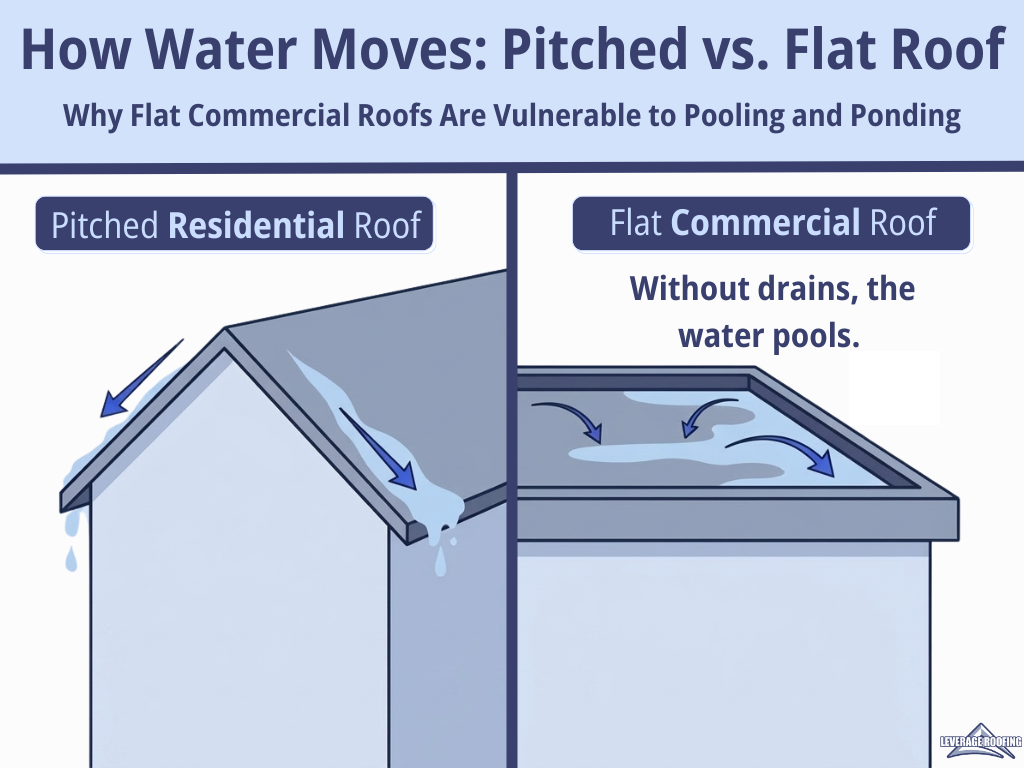
Commercial and residential roofs face fundamentally different demands. Most commercial buildings use a flat roof or low-slope system, which means water does not shed the way it does on a pitched residential roof. Drainage systems carry the full weight of that responsibility. When they fail or become blocked, water pools and accelerates deterioration across large sections of roofing material.
Commercial properties are also typically larger. A problem covering a small percentage of the roof surface can still represent hundreds of square feet of damage. And because business operations run during normal hours, spotting a ceiling stain or a musty smell may be the first clue a roof leak has been developing for weeks.
A well-maintained roof protects more than the building itself. The mechanical equipment, inventory, and occupants inside all depend on the roofing system staying intact.
Three Categories of Roofing System Wear
Understanding how commercial roof damage develops helps building owners and property managers recognize warning signs faster.
Wear from weathering
UV exposure breaks down roofing membranes over time, causing them to become brittle, crack, or shrink. Heat, humidity, freeze-thaw cycles, and prolonged sun exposure all accelerate this process depending on your region and roofing materials in place.
Wear from drainage failure
Clogged or improperly sloped drainage systems allow water to pond on the surface. Standing water is one of the most common drivers of premature roof failure. It stresses seams, promotes algae growth, and adds significant weight load to the roof structure.
Wear from storm events
High winds can lift membrane edges, unseat flashing, and deposit debris that punctures or abrades roofing surfaces. Even a storm that seems minor can create entry points for water if flashing or seams are compromised.
Top Warning Signs Your Commercial Roof Needs Attention
These are the signs that tell you your roof maintenance program needs to respond now, not at the next scheduled inspection.
- Interior water stains or active leaks: Water showing up on ceilings, walls, or near light fixtures points to a roof leak somewhere in the system. The leak location inside rarely corresponds directly to where the roof is failing, so a thorough inspection is needed to trace the source.
- Ponding water 48 hours after rain: Some temporary pooling is expected on flat roofs during and immediately after rain. Water still present 48 hours later indicates a drainage problem or surface depression that requires attention.
- Membrane bubbling or blistering: Bubbles in the roofing membrane mean air or moisture is trapped beneath the surface. These spots will eventually rupture, creating direct pathways for water intrusion.
- Separated or damaged flashing: Flashing seals the edges and penetrations of a commercial roof, including HVAC units, vents, drains, and parapet walls. When flashing lifts, cracks, or separates, those points become the most likely entry locations for water.
- Visible cracks, tears, or punctures: Physical damage to the membrane can come from foot traffic, debris impact, or thermal expansion and contraction. Even small penetrations allow water in over time.
- Sagging or soft spots: Any area of the roof that feels soft underfoot or appears to sag visually points to potential structural damage, often caused by prolonged moisture exposure to the roof deck.
- Significant surface material loss: On modified bitumen and certain coated systems, visible loss of surface material signals that the membrane has moved past normal wear and is approaching failure.
How a Commercial Roof Maintenance Program Works
A structured maintenance program is the most cost-effective way to extend the life of a commercial roofing system and avoid emergency repairs.
Scheduled Inspections
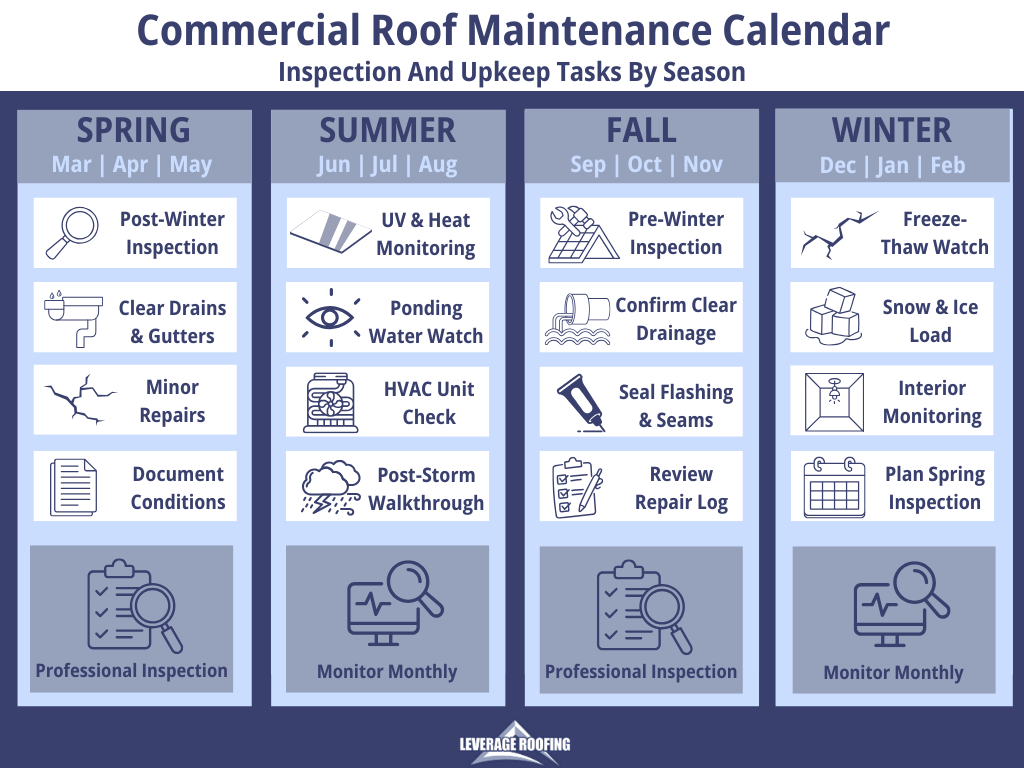
Twice-yearly roof inspections form the foundation of any solid program. Spring inspections catch damage from winter storms and temperature swings. Fall inspections prepare the roof before the harshest weather of the year arrives. A qualified roofing contractor should conduct each commercial roof inspection, checking membrane condition, flashing integrity, drainage systems, penetrations, and field seams.
Between professional inspections, property managers and building owners should walk the roof after major storm events and watch for interior signs of water intrusion. Keeping a simple roof log with dated notes on conditions helps a roofing contractor identify patterns over time.
Routine Upkeep Between Inspections
Routine maintenance tasks between scheduled visits include keeping drains and gutters clear of debris, removing standing vegetation or algae growth, and making sure HVAC and other rooftop equipment have not shifted in ways that stress the membrane around their bases.
Timely Minor Repairs
Timely minor repairs are the defining habit of building owners who avoid expensive repair cycles. A small blister addressed during a maintenance visit costs a fraction of what that same area will cost after a season of water intrusion. The National Roofing Contractors Association recommends that building owners document roof conditions, maintain repair records, and work with experienced contractors to establish a formal maintenance program tied to the specific roofing system in place.
Why Coastal Climates Require Extra Attention
For commercial properties located near the coast, standard maintenance practices need to go a step further. Salt air accelerates corrosion on metal components including flashing, fasteners, and drainage hardware. Elevated humidity promotes mold and algae growth on roofing surfaces. Hurricane season brings the added threat of high winds and wind-driven rain, which can exploit any weakness in membrane seams or flashing details.
Property managers in coastal areas should schedule inspections more frequently than the standard twice-yearly cadence, particularly after named storms. Roofing materials should be evaluated for their compatibility with a salt-air environment, and drainage systems should be checked and cleared before storm season begins each year.
Leverage Roofing: Commercial Roof Maintenance on the South Carolina Coast
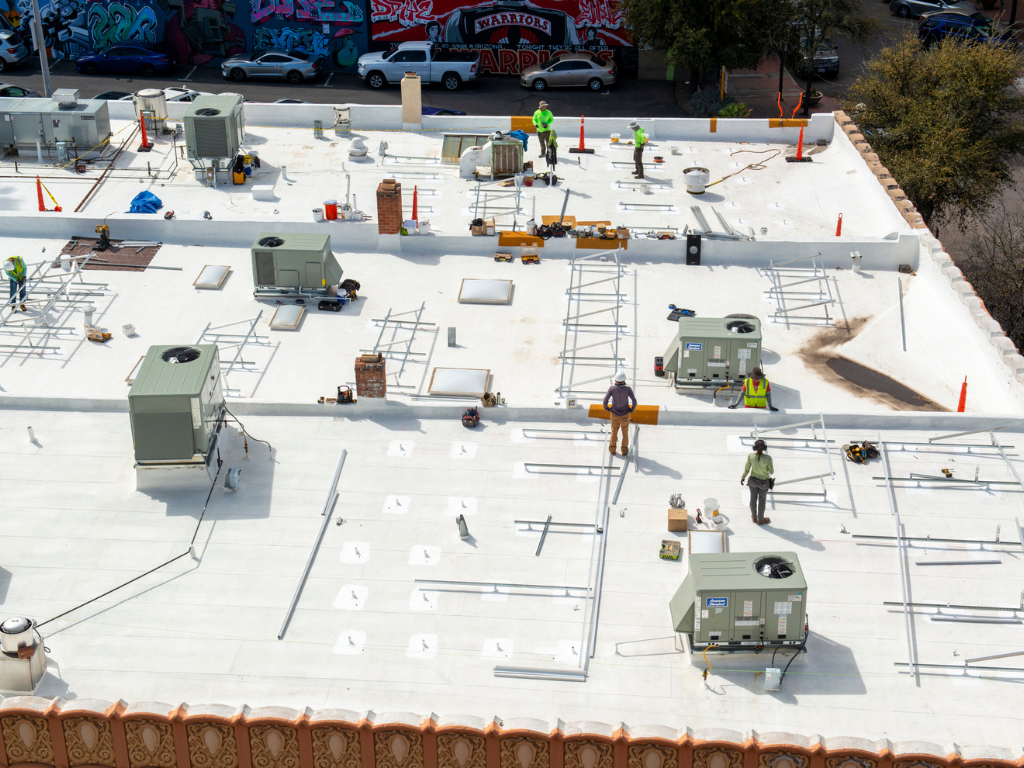
At Leverage Roofing, our commercial roof maintenance services are built for the specific conditions property managers and business owners face along the Grand Strand. We understand the combination of coastal humidity, storm activity, and heat that puts South Carolina commercial roofs under constant stress.
Our team provides free commercial roof inspections, detailed assessments, and a clear picture of what your roof needs before small issues develop into severe damage. Whether you manage an office building, retail space, or industrial property, we bring a thorough approach to every inspection and repair job.
Schedule a free commercial roof inspection with Leverage Roofing today. Contact us online and let our team assess your roof’s current condition.
How often should a commercial roof be inspected?
Most roofing professionals recommend inspecting a commercial roof at least twice per year, typically in the spring and fall. Inspections should also be scheduled after major storms or any event that could cause physical damage to the roofing system.
What are the most common signs a commercial roof needs maintenance?
The most common signs include interior water stains, ponding water that persists more than 48 hours after rain, membrane blistering or bubbling, separated flashing, and visible cracks or tears in the roofing surface. Any of these signs warrants a professional commercial roof inspection.
What happens if commercial roof maintenance is neglected?
Neglecting regular maintenance allows small issues to develop into structural damage, widespread water intrusion, and premature roof failure. What begins as a minor repair often becomes a costly full roof replacement when left unaddressed over multiple seasons.
Does a commercial roof need maintenance even if there are no visible leaks?
Yes. Many early signs of commercial roof deterioration, such as membrane shrinkage, flashing separation, and drainage problems, are not visible from inside the building. Regular roof inspections catch these potential problems before they cause interior damage.
Can insurance cover commercial roof repairs?
Insurance coverage depends on the cause of the damage. Storm damage is commonly covered under commercial property policies. A licensed roofing contractor can help document the damage, assess the scope, and support you through the insurance claims process.