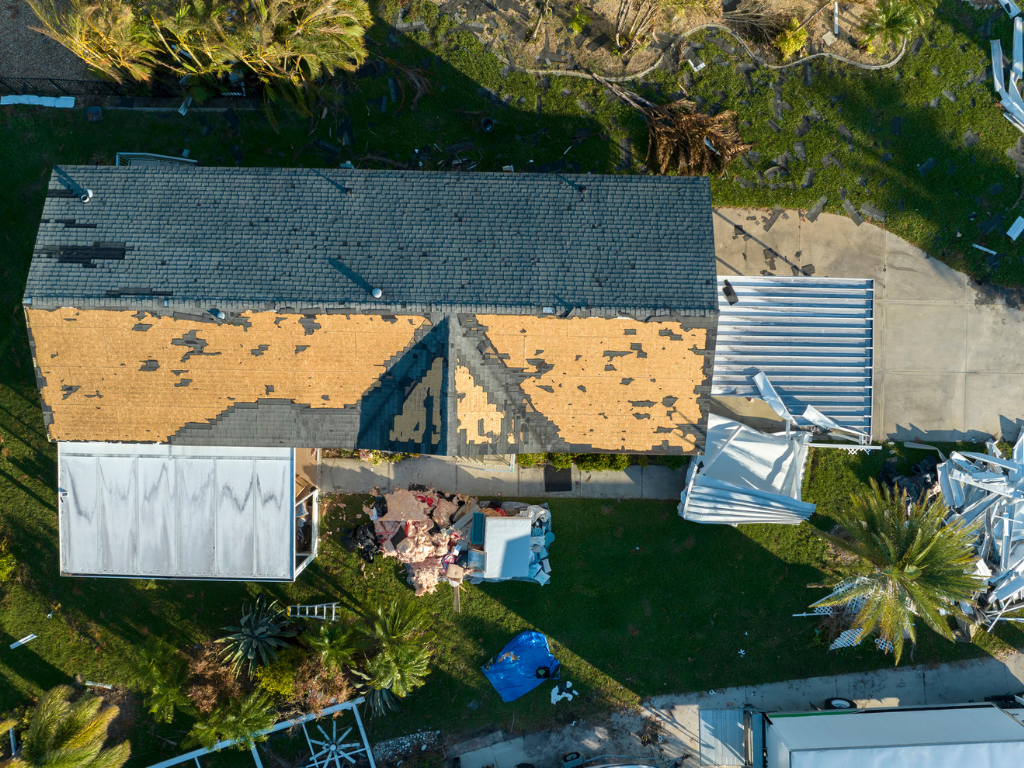
Repair your roof when damage is isolated and the roof is less than 15 years old. Replace your roof when damage covers more than 30% of the surface, structural damage is present, or your roof has reached the end of its expected lifespan.
Choosing between roof repair and roof replacement is one of the biggest decisions a homeowner faces. The right call protects your home, saves money in the long run, and gives you peace of mind during storm season. Coastal homeowners deal with unique challenges, from hurricane-force winds to salt air that wears down roofing material fast.
This guide walks through warning signs, the factors that should guide your decision, and how to work with a roofing contractor you can trust.
How Do You Know If Your Roof Needs Repair or Replacement?
The first step is honest inspection. Some problems point to simple roof repair, while others signal that the entire roof has reached the end of its service life.
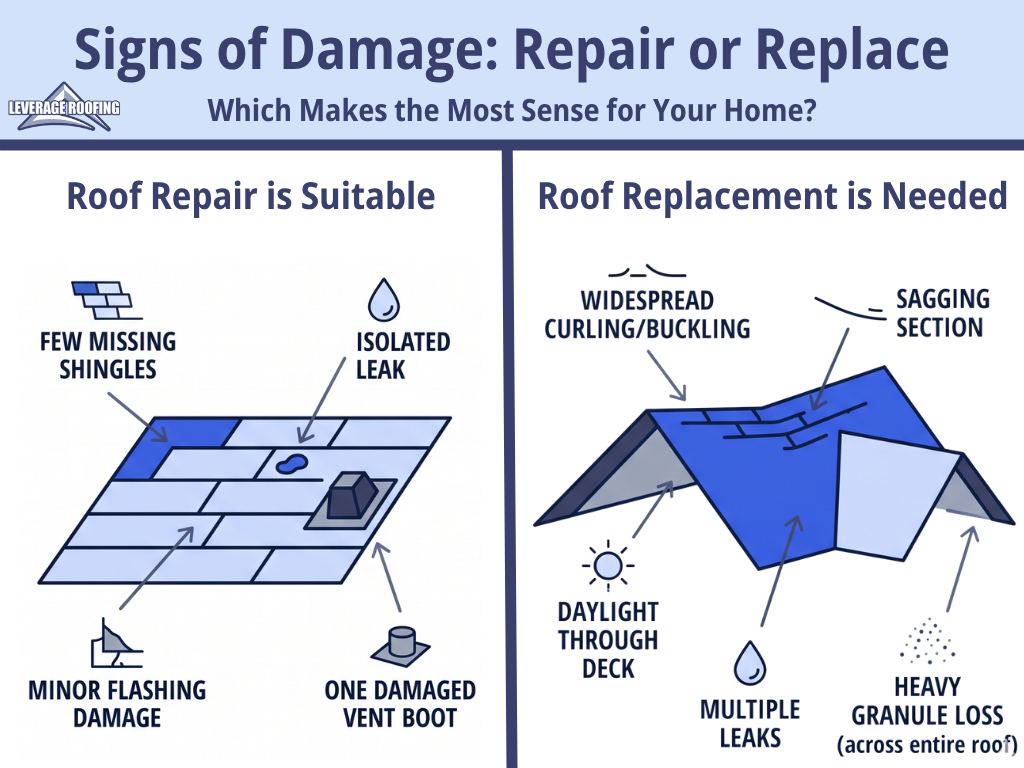
Signs You Likely Need Roof Repair
- A few missing shingles after a storm: Isolated wind damage on one slope is usually a straightforward fix.
- Small leaks around flashing or vents: These point to worn sealant or damaged flashing, not the whole roof.
- Damaged shingles in a small area: A localized hit from a fallen branch rarely affects the rest of the roof.
- Minor granule loss in one spot: Targeted shingle replacement restores protection.
Signs You Likely Need Roof Replacement
- Widespread missing or curling shingles: Damage across the whole roof points to age or extensive storm damage.
- Sagging sections or a wavy roof appearance: These warning signs indicate structural damage to the wood decking.
- Daylight visible through the roof in your attic: Light coming through means gaps that water will follow.
- Granules filling gutters across the entire roof: Heavy granule loss signals shingles near the end of life.
When Does Roof Repair Make Sense?
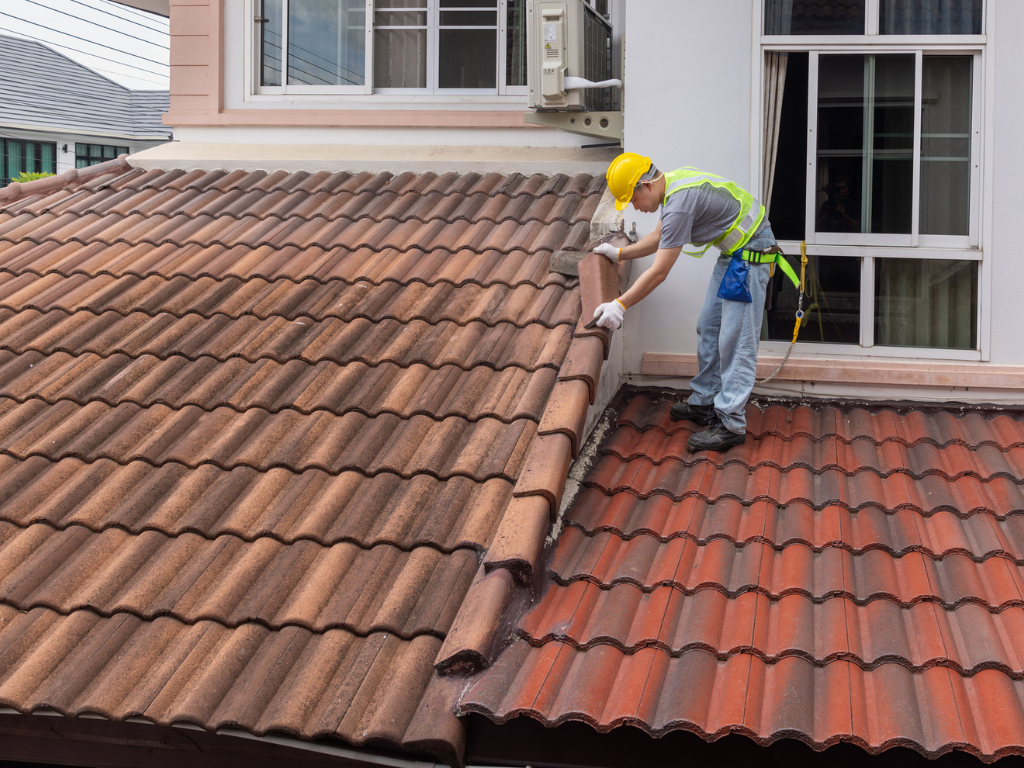
Roof repair is the best option when damage is contained and your roof has plenty of life left. A well-handled repair can extend your roof’s lifespan by years and cost a fraction of a full roof replacement.
Your Roof Is Less Than 15 Years Old
A roof under 15 years old usually justifies repair over replacement. Younger roofs have years of useful life remaining, and isolated damage rarely affects the whole roof. Repairing a young roof preserves your original investment.
Damage Is Limited to a Small Area
Storm damage often affects only one slope or a small section. Missing shingles, a damaged vent boot, or minor water damage near a chimney can be fixed without touching the rest of the roofing system. These targeted repairs cost much less than a full replacement.
Insurance Covers the Damage
When homeowners insurance covers storm damage, repair often makes sense. Your insurance company will pay to bring the roof back to its pre-storm condition. Working with a roofing contractor who handles insurance claims regularly makes the process smoother and faster.
One word of caution: A temporary fix like a tarp should only buy time until proper repairs happen. Leaving a temporary fix in place leads to water damage and bigger repair costs down the road.
When Should You Replace Your Roof?
Full roof replacement makes sense in several situations. Knowing when to invest in a new roof prevents bigger problems and often saves money over the long run.
Your Roof Has Reached Its Expected Lifespan
Different roofing materials have different lifespans:
- Asphalt shingle roofs: 15 to 30 years
- Metal roofing: 40 to 70 years
- Tile roof (clay tile or concrete): 50 to 100+ years
- Slate roof: 75 to 150+ years
An old roof at or past these milestones rarely justifies continued repair investment.
Damage Covers a Large Portion of the Roof
When extensive damage affects more than 30% of the roof, a full roof replacement usually costs less than piecemeal repair. Severe weather events like hurricanes and tropical storms often cause this level of harm.
Repeated Repairs Are Adding Up
If you’ve paid for multiple repairs in recent years, the cost of repair may exceed what a new roof would cost. A full replacement gives you a fresh start, new manufacturer warranties, and years of worry-free protection.
Structural Damage Is Present
Sagging areas, rotted wood decking, or compromised framing point to structural damage that goes beyond surface repair. These problems create a safety issue and require full roof replacement to fix properly.
What Factors Should Influence Your Decision?
Several factors shape the repair-versus-replace choice. Consider each one before committing to either path.
Cost Comparison
Roof repair costs less upfront, but repeated repairs on an old roof add up fast. A common rule of thumb: if the cost of repair exceeds 30% of a full replacement, replacement is the smarter investment.

Insurance Coverage
Insurance coverage often determines what makes sense. After severe weather, your insurance company may cover full replacement when damage is widespread. Document everything with photos, save inspection reports, and work with a contractor experienced in insurance claims.
Energy Efficiency
A new roof often improves energy efficiency. Modern roofing material reflects heat better and works with proper attic ventilation to lower cooling costs. Cool rroofing options can reduce energy use by up to 15%, which matters during the hot summer months.
Future Plans for Your Home
Planning to sell soon? A new roof boosts curb appeal and resale value, and buyers feel more confident with recent replacement. Staying long-term? Full replacement may make better financial sense than years of patchwork repairs.
Material Considerations
Asphalt shingle roofs cost less but have shorter lifespans. Metal roofing, tile roofs, and slate roofs cost more upfront but last decades longer with regular maintenance. Your budget and how long you plan to stay both matter here.
Leverage Roofing: Your Partner in Roof Repair and Replacement Decisions
Making the right call between roof repair and roof replacement comes down to honest assessment, good information, and a roofing contractor you trust. Leverage Roofing brings over 30 years of construction experience to every project across coastal South Carolina. As a family-owned company based in Murrells Inlet, we understand the toll high winds, salt air, and severe weather take on local roofs.
Our team provides free inspections, honest assessments, and clear estimates so you can make the best decision for your home. We handle everything from minor damage repairs to full roof replacement, and we work directly with your insurance company to make claims easier. Flexible financing options put quality work within reach for every homeowner.
Schedule your free inspection with us today and find out exactly what your roof needs. We’ll give you straight answers and quality workmanship that protects your home for years to come.
How do I know if I need to repair or replace my roof?
Roof repair makes sense when damage is isolated and your roof is less than 15 years old. Roof replacement is the better choice when damage covers more than 30% of the roof, your roof has reached its expected lifespan, or you see structural damage like sagging or rotted wood decking. A professional inspection from a qualified roofing contractor gives you the clearest answer.
Does homeowners insurance cover a new roof?
Homeowners insurance often covers roof damage caused by severe weather, including high winds, hail, and falling debris. Insurance coverage usually does not include damage from normal wear, aging, or lack of regular maintenance. Working with a roofing contractor experienced in insurance claims helps you get fair compensation for covered damage.
How much damage is too much to repair?
Most roofing contractors recommend full roof replacement when damage affects more than 30% of the roof’s surface or when repair costs exceed 30% of replacement cost. Extensive damage from severe weather, multiple leaks across the entire roof, or structural damage usually points to replacement rather than repair.
Can I just replace a few damaged shingles instead of the whole roof?
Yes, replacing a few damaged shingles or missing shingles in a small area is a common and affordable roof repair. This works well when your roof is in good shape overall and the damage is contained. New shingles may not perfectly match older ones in color, but the repair fully restores protection from water damage.
How long does a roof replacement take?
Most residential roof replacements take one to three days, depending on roof size, roofing material, and weather conditions. Asphalt shingle installation is faster than tile roofs or metal roofing. A reputable roofing contractor will give you a clear timeline and daily progress updates before starting work on your new roof.