Commercial roof waterproofing uses membranes or liquid coatings to seal flat and low-slope roofs against water, helping property owners avoid leaks, structural damage, and costly repairs. Costs vary based on roof size, material choice, and roof condition, with most projects taking a few days from inspection to final cure.
Water is one of the biggest threats to any commercial building. A small leak in the wrong spot can rot insulation, stain ceilings, damage inventory, and even weaken the roof deck below. For property owners and managers, waterproofing is one of the smartest ways to protect a building without taking on a full tear-off. This guide walks through what commercial roof waterproofing involves, the materials used, what influences price, and what to expect once a project gets going.
What Is Commercial Roof Waterproofing?
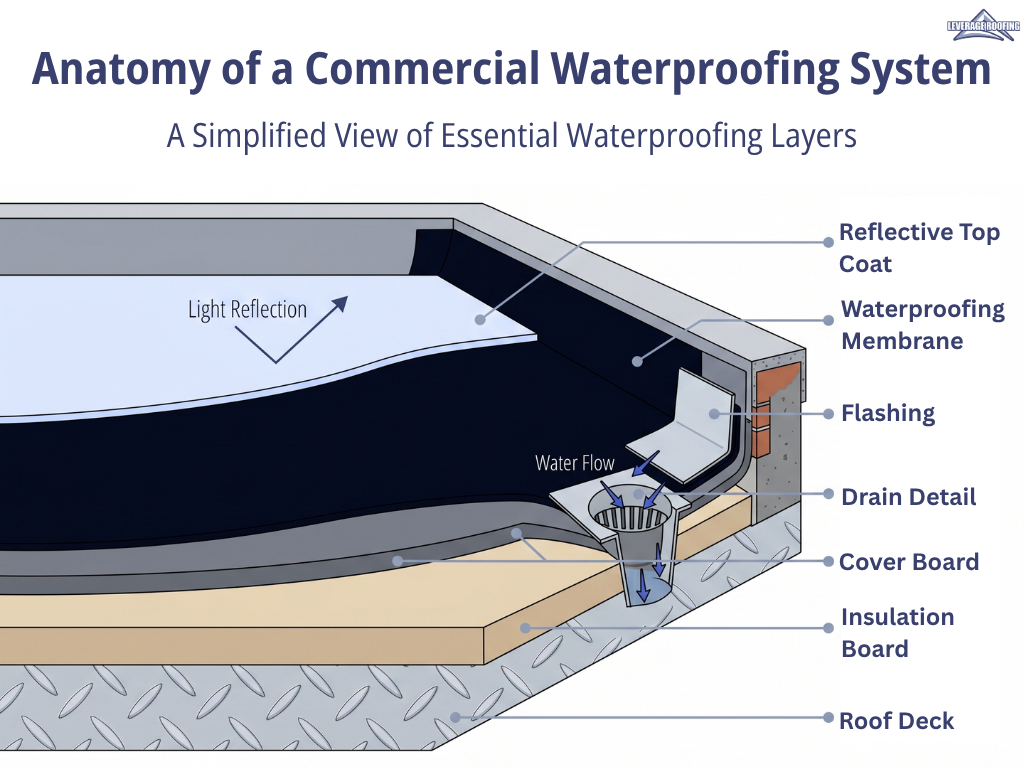
Commercial roof waterproofing is the process of applying a protective layer to a roof so water cannot pass through it. The layer can be a sheet membrane, a fluid-applied coating, or a hybrid of both. The goal is a continuous watertight barrier across the entire roof surface, including around drains, vents, HVAC units, and other weak points.
Why Commercial Roofs Need It
Most commercial buildings have a flat roof or low-slope roof. These designs drain more slowly than steep residential roofs, so water often pools in low spots. Standing water, UV radiation, and temperature fluctuations all break down roofing materials over time. Waterproofing addresses these weak points before they turn into leaks.
A well-installed waterproofing system supports the building’s structural integrity, improves energy efficiency by reflecting sunlight, and extends roof life by 10 years or more. For an aging commercial roof, that often means avoiding a full replacement.
What Materials Are Used in Commercial Roof Waterproofing?
Several materials are used in commercial roof waterproofing, and the right choice depends on roof type, climate, and budget. Most commercial systems fall into one of three categories.
Single-Ply Membranes
Single-ply membranes are large sheets rolled out across the roof and bonded at the seams. The three main types are TPO (thermoplastic polyolefin), PVC (polyvinyl chloride), and EPDM (a synthetic rubber). TPO and PVC are popular for their reflective white surface, which lowers cooling loads in warm climates. EPDM resists UV light well and stays flexible in cold weather.
Modified Bitumen and Built-Up Roofing
Modified bitumen uses asphalt reinforced with rubber or plastic polymers and comes in rolls. Built-up roofing layers asphalt and fabric to create a thick, multi-ply waterproofing system. Both options work well on low-slope roofs and have been used for decades on warehouses, schools, and office buildings.
Liquid-Applied Roof Coatings
Roof coatings are fluid waterproofing products rolled or sprayed onto an existing roof. Common types include:
- Elastomeric coatings: These can stretch up to 300% of their original size, making them well suited to roofs that expand and contract with heat.
- Silicone coatings: Highly resistant to UV radiation and standing water, they are popular for flat roofs prone to ponding.
- Polyurethane coatings: Tough against foot traffic and physical damage, they are often used on roofs that need regular service.
- Acrylic coatings: Cost-friendly and reflective, they are a strong choice for sunny climates.
Liquid coatings form a continuous waterproof coating with no seams, which removes the most common leak points on commercial roofs.
How Much Does Commercial Roof Waterproofing Cost?
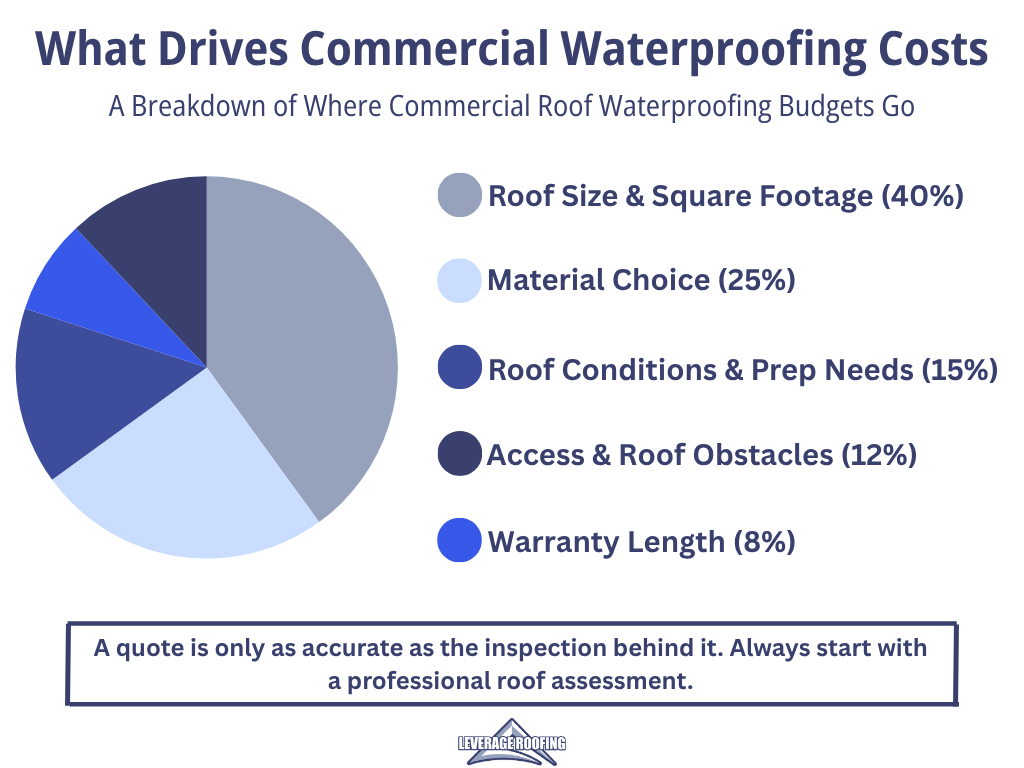
The cost of a waterproofing project depends on several factors, not a single flat rate. A small storefront and a multi-acre warehouse will see very different totals.
Factors That Affect Price
The main cost drivers include:
- Roof size: Larger roofs use more material and more labor hours.
- Roof condition: A roof with damaged insulation, ponding water, or major repair needs costs more to prep.
- Material choice: Liquid coatings often cost less than a full single-ply replacement, while built-up roofing sits in the middle.
- Access and obstacles: Rooftop HVAC units, skylights, and complex flashings add labor time to the waterproofing project.
- Warranty length: Longer manufacturer warranties usually require thicker coatings or extra layers.
Most reputable waterproofing contractors offer a free inspection and written estimate. That removes the guesswork and lets property owners compare options side by side. In many cases, a waterproofing project costs a fraction of a full roof replacement and adds years of roof life.
What to Expect During a Waterproofing Project
A typical commercial waterproofing project follows a clear set of steps. Knowing the process up front helps property managers plan around it.
Inspection and Surface Prep
The contractor starts with a thorough roof inspection to check seams, flashings, drains, and any signs of water damage. The roof surface is then cleaned, often with pressure washing, and any soft or damaged areas are repaired. Good prep is what gives the new waterproofing system long-term durability.
Application Process
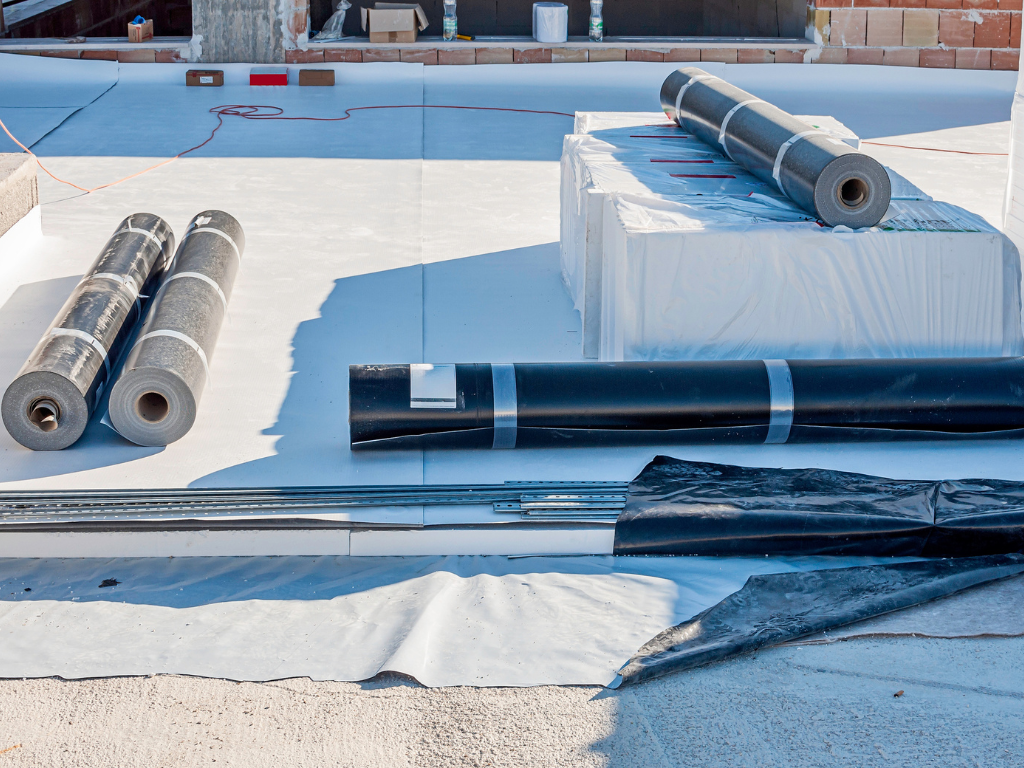
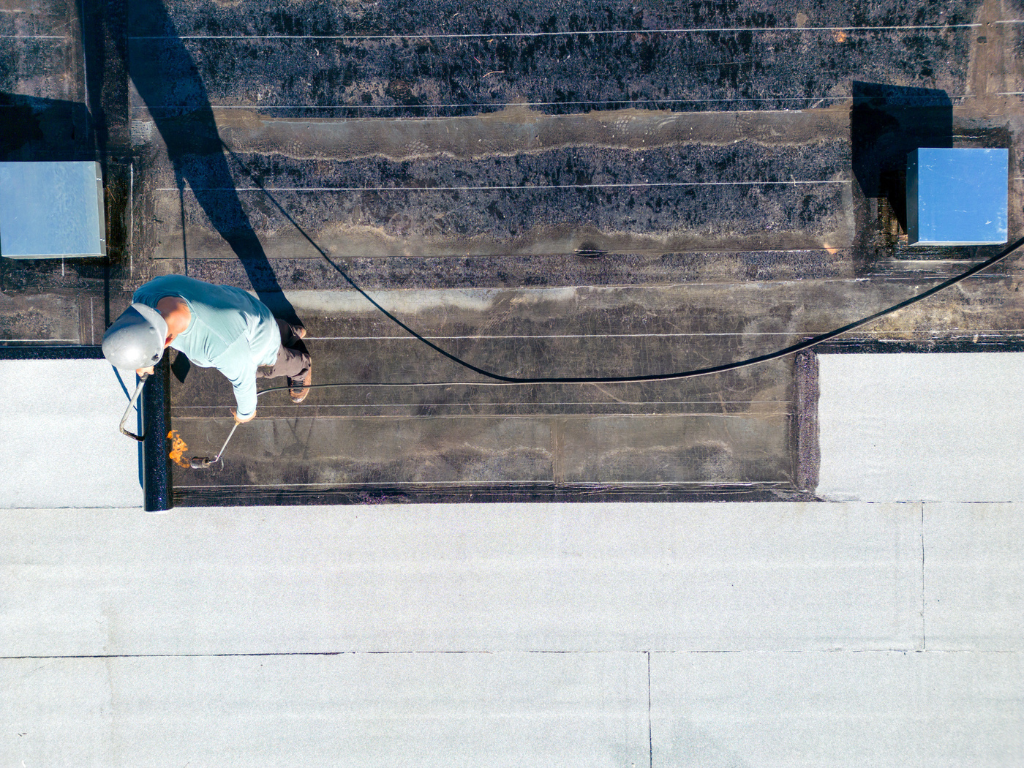
For coatings, a primer goes down first, followed by one or more coats of the waterproof coating. For sheet membranes, the material is rolled out, fastened or adhered, and heat-welded at the seams. Each layer is checked before the next goes on so weak points are caught early.
Ongoing Maintenance
Once the system is in place, routine maintenance protects the investment. Regular inspections twice a year, after major storms, and after rooftop service work catch small issues early. Keeping drains clear and addressing minor punctures right away helps the roofing system reach its full service life.
Leverage Roofing: Your Partner in Commercial Roof Waterproofing
A waterproof commercial roof protects far more than the building itself. It protects inventory, equipment, employees, and the day-to-day operations that keep your business running. The right waterproofing system, installed by an experienced team, can add a decade or more of roof life and lower energy bills along the way.
Leverage Roofing brings over 30 years of construction experience to commercial clients across coastal South Carolina, including office buildings, warehouses, shopping centers, schools, and apartment complexes. Our team handles repair, full installation, maintenance programs, and inspections for flat roofs, metal roofs, and single-ply systems.
Call us today or request a free inspection online to learn what waterproofing options fit your building.
What is the purpose of commercial roof waterproofing?
Commercial roof waterproofing creates a watertight barrier that stops water from reaching the roof deck, insulation, and interior of the building. It prevents leaks, mold, and structural damage while extending roof life. Most systems also reflect sunlight, which lowers cooling costs.
How long does commercial roof waterproofing last?
A professionally installed waterproofing system typically lasts 10 to 20 years, depending on the material and climate. Silicone and polyurethane coatings tend to perform best on roofs that hold standing water. Regular maintenance and inspections can stretch the system even further.
Can any commercial roof be waterproofed?
Most low-slope and flat commercial roofs can be waterproofed, including TPO, PVC, EPDM, modified bitumen, built-up roofing, and metal roof systems. Each surface needs the right primer and coating type for proper adhesion. A waterproofing contractor evaluates the roof before recommending a system.
Is waterproofing cheaper than a full roof replacement?
Yes, in most cases waterproofing costs less than a full tear-off and replacement. Coatings and restoration systems extend the life of an existing roof without sending old materials to a landfill. It is often the better option for roofs in fair condition with localized issues.
How often should a commercial roof be inspected?
Most commercial roofs should be inspected at least twice a year, once in the spring and once in the fall. Additional inspections after major storms or heavy rainfall catch damage early. Regular inspections are the single biggest factor in long-term roof performance.