The roof over your commercial building does more than keep out the rain. It protects your equipment, inventory, and property value from the ground up. Choosing the wrong roofing system leads to costly repairs, poor energy efficiency, and a shorter lifespan overall. This guide covers the most widely used commercial roofing types so business owners and property managers can make informed decisions before calling a contractor.
The Most Common Commercial Roof Types
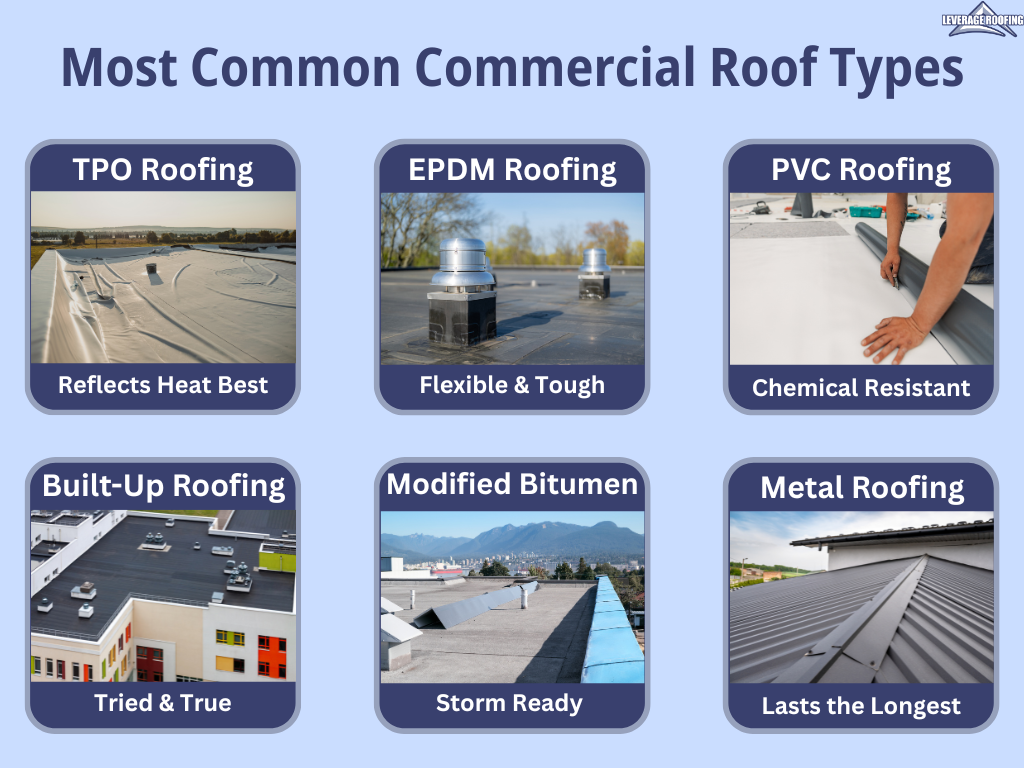
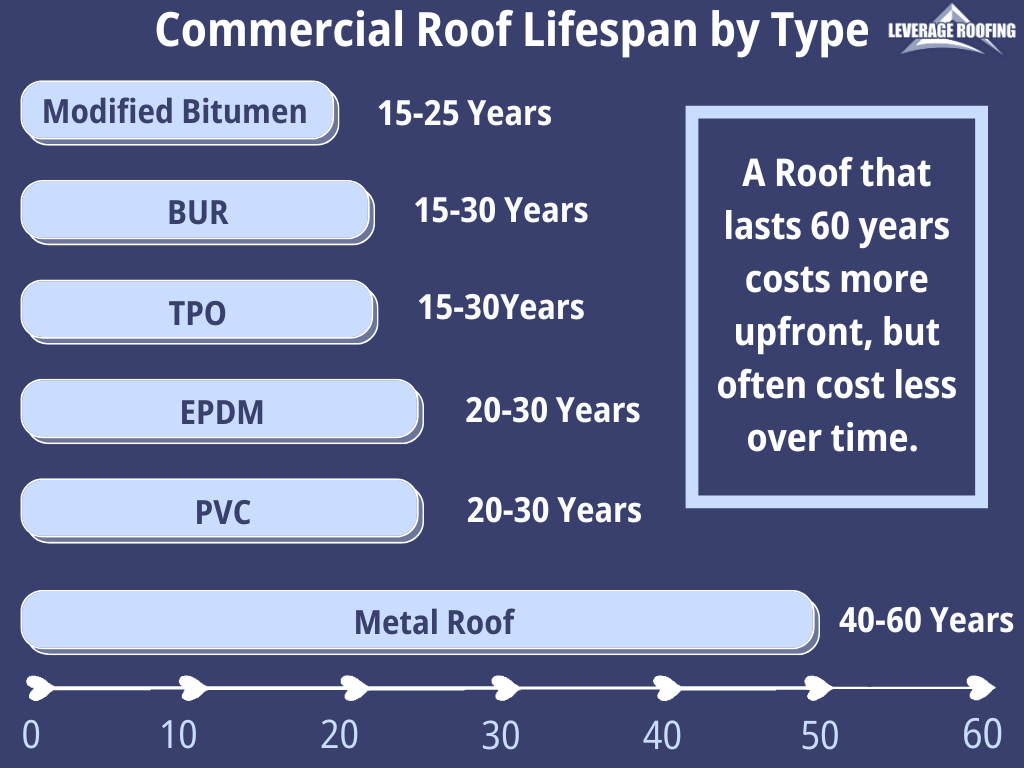
Most commercial buildings use flat or low-slope roofing systems, which require different roofing materials than the asphalt shingles found on residential homes. Here are the six most widely used commercial roofing options and their average lifespan.
TPO Roofing (Thermoplastic Polyolefin)
TPO roofing has become one of the most popular choices in commercial roofing today. This single-ply membrane reflects UV rays, which reduces heat absorption and supports energy savings during warm months. TPO performs well in humid coastal climates and holds up under high winds. Most TPO roofs last 15 to 30 years with proper maintenance and professional installation.
EPDM Roofing (Ethylene Propylene Diene Monomer)
EPDM is a synthetic rubber membrane, often referred to simply as a rubber roof. It handles temperature fluctuations well and resists UV rays without breaking down quickly. EPDM is a reliable roofing solution for low slope roofs on industrial buildings and larger commercial properties. Lifespan typically ranges from 20 to 30 years.
PVC Roofing (Polyvinyl Chloride)
Polyvinyl chloride roofing is a single-ply membrane known for strong fire resistance and resilience against chemical exposure. It is an excellent choice for restaurants, food processing facilities, and industrial buildings where grease or fumes are a regular concern. PVC roofing generally lasts 20 to 30 years and offers solid energy efficiency thanks to its reflective surface.
Built-Up Roofing (BUR)
Built-up roofing is one of the oldest commercial roofing systems still widely used on commercial buildings. Multiple layers of bitumen roofing material and reinforcing fabrics are applied over the roof deck, creating a thick, durable surface. BUR excels at waterproofing flat roofs and handles heavy foot traffic well. Lifespan runs from 15 to 30 years depending on the number of layers and installation quality.
Modified Bitumen Roofing
Modified bitumen roofing builds on built-up roofing by incorporating polymer modifiers that improve flexibility and strength. It handles extreme weather conditions better than traditional BUR and comes in torch-applied, cold-applied, and self-adhering installation methods. Lifespan falls between 15 and 25 years for most commercial applications.
Metal Roofing
Metal roofing is a long-lasting option for commercial properties with lifespans reaching 40 to 60 years. Standing seam metal systems perform well in coastal and storm-prone areas, offering strong resistance to high winds and corrosion. Metal roofs reflect heat, support energy savings, and require minimal upkeep compared to membrane systems.
Comparing Commercial Roofing Options at a Glance
This table covers the main factors building owners weigh when selecting a commercial roofing system.
| Roof Type | Lifespan | Best For | Energy Efficiency |
|---|---|---|---|
| TPO | 15–30 years | Warm climates, flat roofs | High — reflective surface |
| EPDM (Rubber Roof) | 20–30 years | Low slope, industrial buildings | Moderate |
| PVC | 20–30 years | Chemical exposure environments | High — reflective surface |
| Built-Up (BUR) | 15–30 years | Flat roofs with foot traffic | Moderate |
| Modified Bitumen | 15–25 years | Extreme weather conditions | Moderate |
| Metal Roofing | 40–60 years | Long-term performance, coastal areas | High — reflective surface |
What to Consider When Choosing a Commercial Roofing System
Selecting the right commercial roofing system goes beyond material preference. Several factors specific to your building and location should guide the decision.
Roof Slope
Most commercial buildings have flat or low-slope roofs. TPO, EPDM, PVC, BUR, and modified bitumen are each designed for these applications. Metal roofing can work on both low-slope and steep-slope commercial buildings, giving it more flexibility across different building types and structures.
Climate and Weather Conditions
In coastal and humid climates, weather conditions include salt air, moisture, intense UV rays, and the threat of high winds during storm season. TPO roofs and metal roofing hold up well in these conditions. EPDM’s flexibility also makes it a solid performer when temperature fluctuations and ongoing moisture exposure are concerns for the building owner.
Energy Efficiency
Reflective membranes like TPO and PVC reduce heat absorption on commercial buildings, which translates to lower cooling costs during hot summers. Metal roofing supports strong energy savings as well. If your building carries high air conditioning costs, an energy-efficient roof type can provide measurable payback over time by reducing monthly utility expenses.
Long-Term Value vs. Upfront Cost
Built-up roofing and modified bitumen typically come with lower upfront costs. TPO offers a middle ground between affordability and long-term performance. Metal roofing costs more at installation but reduces total ownership costs through its extended lifespan and minimal maintenance requirements. Total cost over the roof’s full life is a better measure than installation price alone.
Proper Maintenance for Long-Term Performance
Even the best commercial roofing system needs proper maintenance to reach its full lifespan. Neglected roofs fail early, leading to expensive commercial roof repair or premature replacement before the system’s expected end of life. A consistent maintenance plan protects your investment year after year.
- Inspect twice a year and after major storms: Regular inspections catch membrane tears, damaged flashing, and ponding water before they escalate into interior damage or structural issues.
- Clear debris and drainage points regularly: Blocked drains cause standing water on flat roofs, which stresses the roofing system and accelerates material deterioration over time.
- Check seams and penetrations carefully: Seams and areas around HVAC units, pipes, and roof vents are the most common leak points on commercial roofing systems.
- Consider roof coatings for aging systems: A quality roof coating adds a reflective, waterproof layer to an existing commercial roof, extending its lifespan and improving energy efficiency without the cost of full replacement.
Business owners who commit to routine maintenance consistently spend less on repairs over the long run than those who defer it until damage becomes visible inside the building.
Leverage Roofing: Commercial Roofing Services in South Carolina
Understanding commercial roofing types helps you have a more informed conversation with your contractor and make a smarter investment from the start. But reading about roofing only goes so far. Getting the right recommendation for your specific building requires a trained eye on the actual structure, slope, and condition of your roof.
Leverage Roofing is a family-owned exterior services company based in Murrells Inlet, South Carolina, with over 30 years of construction experience. We offer free inspections, transparent estimates, and hands-on support with insurance claims when storm damage is involved. Whether you’re replacing an aging flat roof or evaluating your commercial roofing options for a new building, our team is here to guide the process from the first inspection through project completion.
Contact Leverage Roofing today to schedule your free commercial roof inspection and find out which roofing system is the right fit for your property.