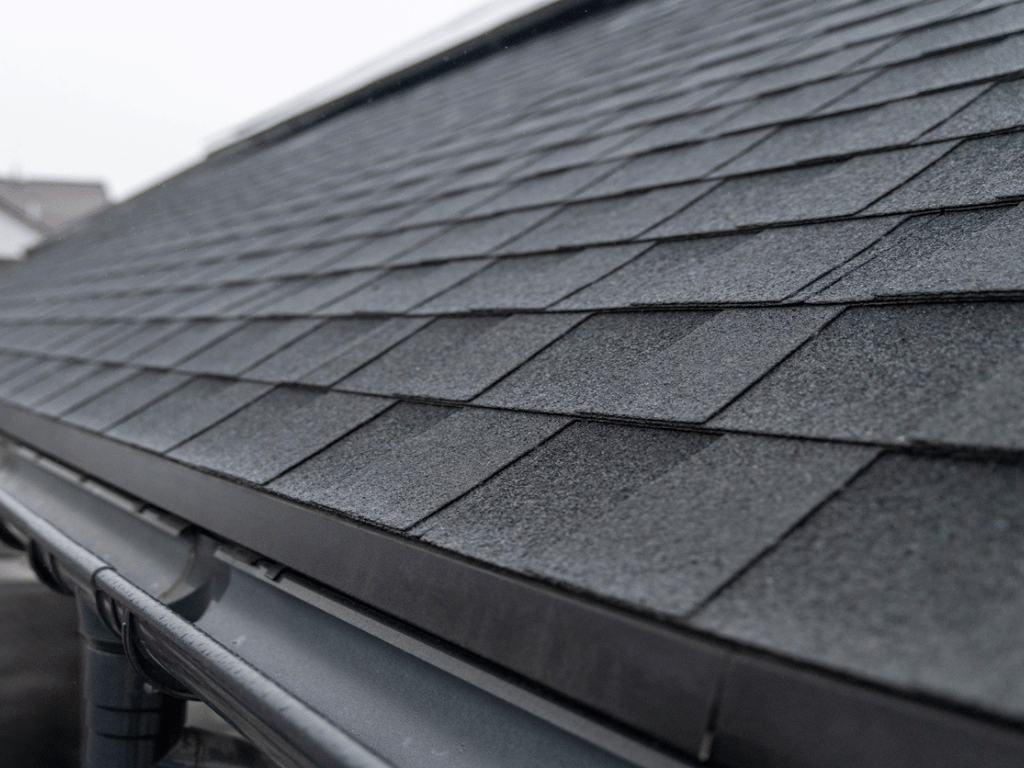
Architectural shingles are a type of asphalt shingle made with laminated layers that create a thicker, more textured roof surface. Traditional 3-tab asphalt shingles are flatter, lighter, and usually cost less upfront, but they often have a shorter lifespan and lower wind ratings.
For a new roof in coastal South Carolina, the right choice depends on your budget, your property’s exposure to severe weather, and your long-term plans.
Homeowners who want stronger weather resistance and added curb appeal often choose architectural shingles. 3-tab asphalt shingles can still work well for a more budget-focused roof replacement.
What is an Asphalt Shingle?
An asphalt shingle is a roofing material made with a fiberglass mat, asphalt coating, and protective mineral granules. Asphalt shingles are among the most common roofing materials for residential homes.
What is an Architectural Shingle?
Architectural shingles are also called dimensional shingles, laminate shingles, or composite shingles. They are made by bonding layers of asphalt material together.
That layered construction creates a thicker shingle with more visual depth. Architectural shingles can resemble wood shake or slate from the ground. They also tend to be heavier than an asphalt shingle, which can improve weather resistance.
How Do Architectural and Asphalt Shingles Perform?
The main difference between these shingle types is construction. An asphalt shingle has a flat, single-layer design. An architectural shingle has a laminated, multi-layer design.
The rest of the roof system still matters. Underlayment, flashing, attic ventilation, roof decking, and installation quality all affect how well a roof performs over time.
| Feature | Asphalt Shingle | Architectural Shingle |
|---|---|---|
| Construction | One flat layer with tab cutouts | Multiple laminated layers |
| Appearance | Flat and uniform | Textured and dimensional |
| Typical lifespan | About 15 to 20 years | About 20 to 30 years |
| Wind resistance | Often up to about 60 to 70 mph | Often up to 110 to 130 mph |
| Material cost | Usually lower | Usually higher |
| Weight | Lighter | Heavier |
| Curb appeal | Basic, traditional look | More depth and visual detail |
Manufacturer specifications control the actual wind rating. The shingle product, nail placement, starter shingles, ridge components, and installation method can all affect wind performance.
A lifetime warranty should also be reviewed carefully. It usually applies to material defects under stated conditions. It does not mean the roof will remain free from storm damage for the homeowner’s lifetime.
Architectural shingles often offer stronger protection in high winds because of their layered construction. They also commonly last longer than three-tab shingles under similar conditions.
Industry comparisons commonly place 3-tab shingles near an 18- to 20-year lifespan, while architectural shingles often range from 20 to 30 years.
Which Shingle Fits Your Roof and Budget?
Choosing a shingle type involves more than comparing material prices. A roof replacement estimate also includes the size and shape of the roof, roof pitch, valleys, dormers, flashing, decking repairs, old-roof removal, and ventilation needs.
Roofers measure roof area in roofing squares. One roofing square equals 100 square feet of roof surface.
When is a 3-Tab Shingle a Good Choice?
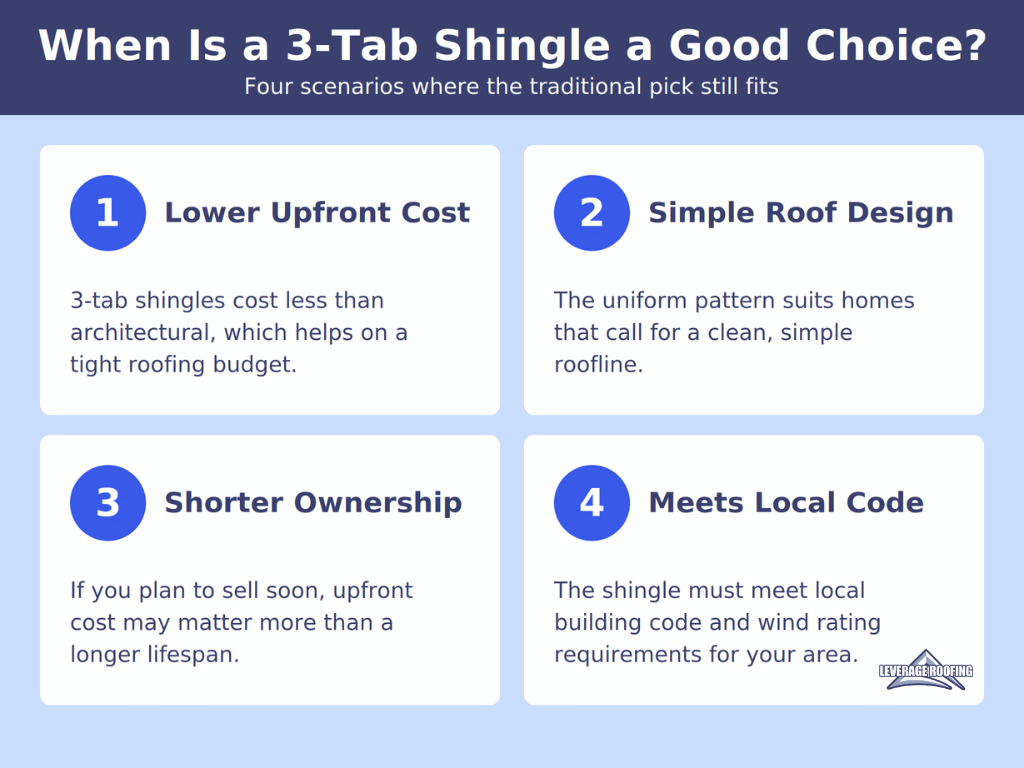
A 3-tab shingle may be the right fit in certain situations.
- Lower upfront expense: Traditional asphalt shingles generally cost less than architectural shingles. This can help homeowners manage a budget-sensitive project.
- Simple roof appearance: Three-tab shingles create a uniform pattern. They fit homes where a clean and simple roof design is the goal.
- Shorter ownership timeline: A homeowner who expects to sell soon may prefer a lower initial cost over a longer lifespan.
- Appropriate local rating: The selected 3-tab asphalt shingle must meet applicable requirements for the property and local area.
A lower price does not make a 3-tab shingle a poor choice. It simply serves a different purpose. The property’s storm exposure and the homeowner’s long-term goals should guide the decision.
When is an Architectural Shingle Roof a Good Choice?
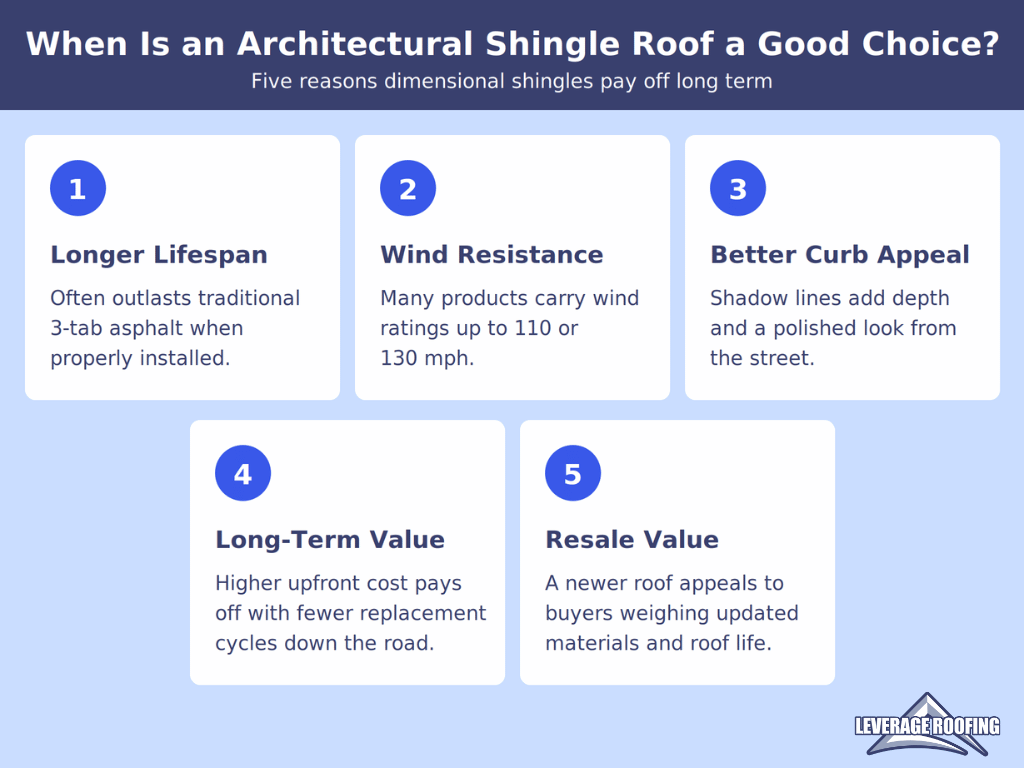
Architectural shingles are often a strong choice for homeowners planning to stay in their home for many years.
- Longer lifespan: Architectural shingles often last longer than traditional asphalt shingles when installed correctly and maintained over time.
- High-wind protection: Many architectural shingle products carry higher wind ratings than 3-tab shingles. Some are rated for winds up to 110 or 130 mph when installed according to manufacturer requirements.
- Improved curb appeal: Dimensional shadow lines add texture to the roof. This can make a home look more polished from the street.
- Long-term investment: A higher initial cost may make sense if you want fewer roof replacement cycles over the life of the property.
- Potential resale value support: A newer architectural shingle roof may appeal to buyers who value appearance, updated materials, and remaining roof life.
Energy efficiency is not determined by shingle thickness alone. Shingle color, solar reflectance, attic insulation, and ventilation all affect how much heat enters the home.
What Should Coastal South Carolina Owners Check?
Coastal South Carolina homes can face strong winds, heavy rain, humid summers, salt air, and tropical storm conditions. These weather conditions can speed up roof wear and expose installation problems.
High-quality architectural asphalt shingles are commonly recommended over basic shingles for coastal properties because laminated materials tend to provide stronger wind resistance and added thickness.
Before selecting a shingle type, use this checklist.
- Confirm the wind rating: Ask for the manufacturer’s wind rating for the exact shingle product. Ask what installation steps are required to qualify for that rating.
- Review warranty terms: Compare material coverage, wind coverage, transfer conditions, and exclusions. A lifetime warranty is not the same as full storm-damage protection.
- Check roof ventilation: Heat and moisture trapped in the attic can shorten the lifespan of roofing materials. Proper intake and exhaust ventilation support the roof system.
- Inspect flashing details: Shingles are only one part of the roof. Flashing around chimneys, vents, walls, and pipe penetrations helps keep water out.
- Keep gutters clear: Clogged gutters can cause water to back up near the roof edge. Routine gutter maintenance supports proper drainage.
- Schedule storm inspections: After severe weather, look for missing shingles, lifted edges, roof debris, granules in gutters, or interior water stains. A professional inspection can identify damage that is difficult to see from the ground.
Freeze-thaw cycles are less common in some climates; however, winter cold snaps can still affect roofing materials. More frequent concerns include extreme weather, strong winds, wind-driven rain, summer heat, and humidity.
How Can Leverage Roofing Help With Your Shingle Choice?
Leverage Roofing helps homeowners and property managers make an informed decision about roof repair and roof replacement. Our company is a family-owned exterior contractor based in Murrells Inlet, South Carolina, with more than 30 years of construction experience.
Leverage Roofing provides roofing installation and repair, seamless gutters, siding, free inspections, and financing options.
A professional roof inspection gives you a clear picture of your current roof’s condition. Leverage Roofing can inspect visible storm concerns, explain your shingle options, and provide a transparent estimate based on your home’s needs. Contact Leverage Roofing to schedule a free inspection and discuss the right asphalt shingle roof for your coastal South Carolina home.
Frequently Asked Questions
Are architectural shingles better than asphalt shingles?
Architectural shingles are asphalt shingles. The common comparison is architectural shingles versus 3-tab asphalt shingles. Architectural shingles are thicker and layered, so they often offer a longer lifespan, stronger wind ratings, and more curb appeal.
How long do architectural shingles last compared with 3-tab shingles?
A 3-tab asphalt shingle roof often lasts about 15 to 20 years. An architectural shingle roof often lasts about 20 to 30 years. The actual lifespan depends on installation, attic ventilation, local weather conditions, and regular maintenance.
Are architectural shingles better for high winds?
Many architectural shingles have higher wind ratings than three-tab shingles. Some products are rated for winds from 110 to 130 mph when installed according to the manufacturer’s requirements. Confirm the exact product rating before choosing shingles for a coastal property.
Do architectural shingles improve resale value?
Architectural shingles can improve curb appeal because they create a textured, dimensional roof appearance. A newer roof can also be attractive to potential buyers. Actual resale value depends on the local market, the home’s overall condition, and roof installation quality.
Can a 3-tab shingle be used for a roof replacement in coastal South Carolina?
A 3-tab shingle can be used if the product and installation meet applicable requirements for the property. Still, many homeowners in coastal areas compare architectural shingles because they often have a longer lifespan and stronger weather resistance. A free roof inspection can help determine the best shingle type for your home.