Homeowners insurance typically pays for a roof replacement when sudden damage from a covered event like wind, hail, fire, or a falling tree destroys your roof. Coverage gets limited when the damage comes from age, normal wear, or poor maintenance.
Storm season brings the same questions to every homeowner with a damaged roof. Will your insurance company pay for a new roof or only a repair? Does your roof’s age change the answer? What happens if the insurance adjuster says the damage is only cosmetic?
Insurance roof replacement questions come up at stressful times, and clear answers make the process easier to handle.
What Roof Damage Does Homeowners Insurance Cover?
Most standard homeowners insurance policies cover sudden, accidental roof damage caused by a covered peril. Wind and hail cause the largest share of homeowners insurance claims by far, which is why storm damage drives most roof claims in coastal areas.
Damage That Usually Qualifies for a Claim
- Wind damage: High winds lift, crease, and tear away shingles, which exposes the roof deck to water intrusion.
- Hail damage: Hail knocks granules loose from asphalt shingles and dents metal panels, shortening the life of the roof even when no hole appears.
- Fire damage: Fire that reaches the roofing materials or the structure below is covered under dwelling coverage.
- Fallen trees and flying debris: A tree or large limb that comes down during a storm is a covered event on most policies.
- Vandalism and break-in damage: Many carriers cover a roof intentionally damaged by another person.
- Roof leaks from a covered event: A roof leak traced back to a storm is usually covered, along with the interior water damage it caused.
How Does Your Roof’s Age and Condition Change Your Payout?
Two homes hit by the same storm can receive very different checks. The difference usually comes down to the roof’s age, the roof’s condition at the time of loss, and one line in your insurance policy.
What Is the Difference Between Replacement Cost and Actual Cash Value?
Replacement cost value pays what a new roof costs today. Actual cash value pays that same amount minus depreciation for the years your roof already served. Here is how the two compare.
| Policy Type | What It Pays | Best For |
| Replacement cost value | The full cost of a comparable new roof, with no deduction for age | Homeowners who want the smallest out-of-pocket costs after a loss |
| Actual cash value | The depreciated value of the roof at the time of the loss | Homeowners prioritizing lower premiums on an older roof |
Replacement cost coverage costs more each month and pays far more after a storm. Check your declarations page, so you know which one you carry.
Can You Still Get a Full Roof Replacement on a 20-Year-Old Roof?
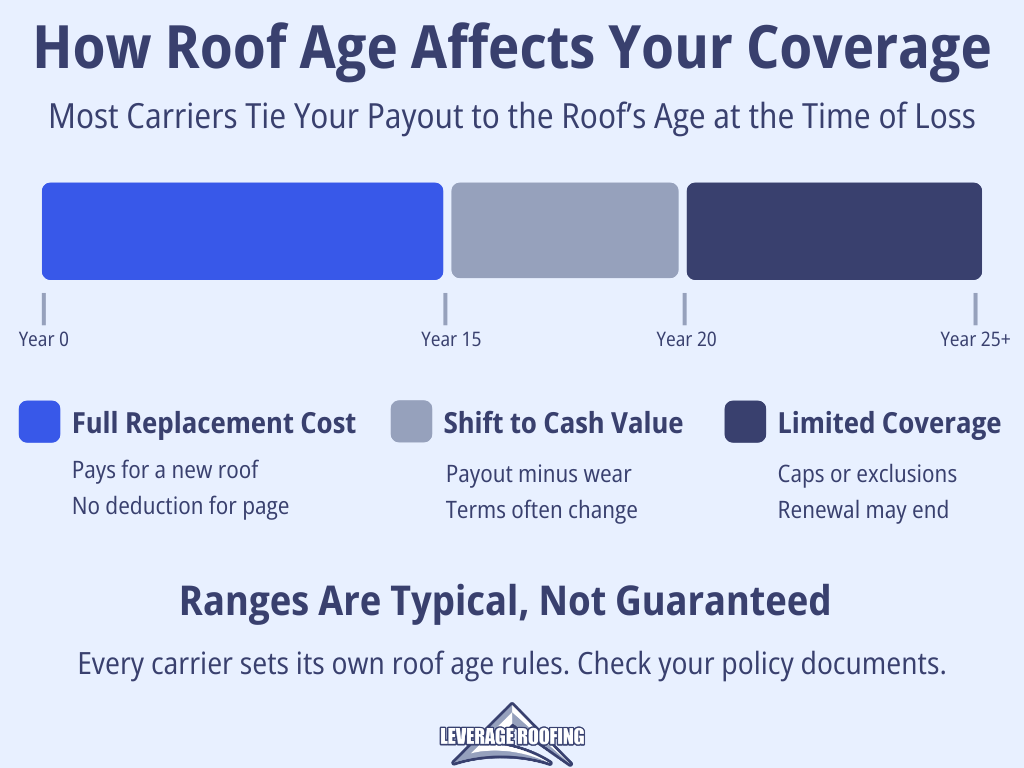
Yes, but the terms often change. Many carriers move older roofs onto an actual cash value schedule once they pass a certain age, commonly 15 to 20 years. A 20-year-old roof with an approved hail damage claim may still get a full replacement, though the payment could reflect years of depreciation. Some insurers also cap or exclude roof coverage entirely on roofs near the end of their service life.
What Should You Do Right After Roof Damage?
Acting quickly protects both your home and your insurance claim. Most policies require prompt notice of a loss, and waiting gives the carrier room to argue the damage was preexisting.
Steps to Take in the First Week
- Document everything: Photograph the roof, the yard debris, and any interior water stains before anyone touches them.
- Make emergency repairs: Tarp the roof to stop further water intrusion, and keep every receipt because most policies reimburse reasonable temporary repairs.
- Call your insurance agent: Report the loss, note the claim number, and ask which documentation the carrier wants.
- Get a professional inspection: An independent roofing contractor can spot storm damage an untrained eye misses and can meet the adjuster on site.
- Keep a written record: Log every call, name, and date so nothing gets lost between the insurance company and the roofing company.
What If the Adjuster Says There Is No Damage?
You have options. Ask your insurance company to send a second insurance adjuster, and provide the photos and inspection report from your roofing contractor. If the second review also denies the claim, you can request an engineering inspection and ask the carrier to explain in writing why your home shows water damage while the roof reportedly does not.
What Will You Pay Out of Pocket?
Even an approved claim leaves some cost with the homeowner. Knowing those numbers in advance prevents surprises.
How Do Deductibles Work on a Roof Claim?
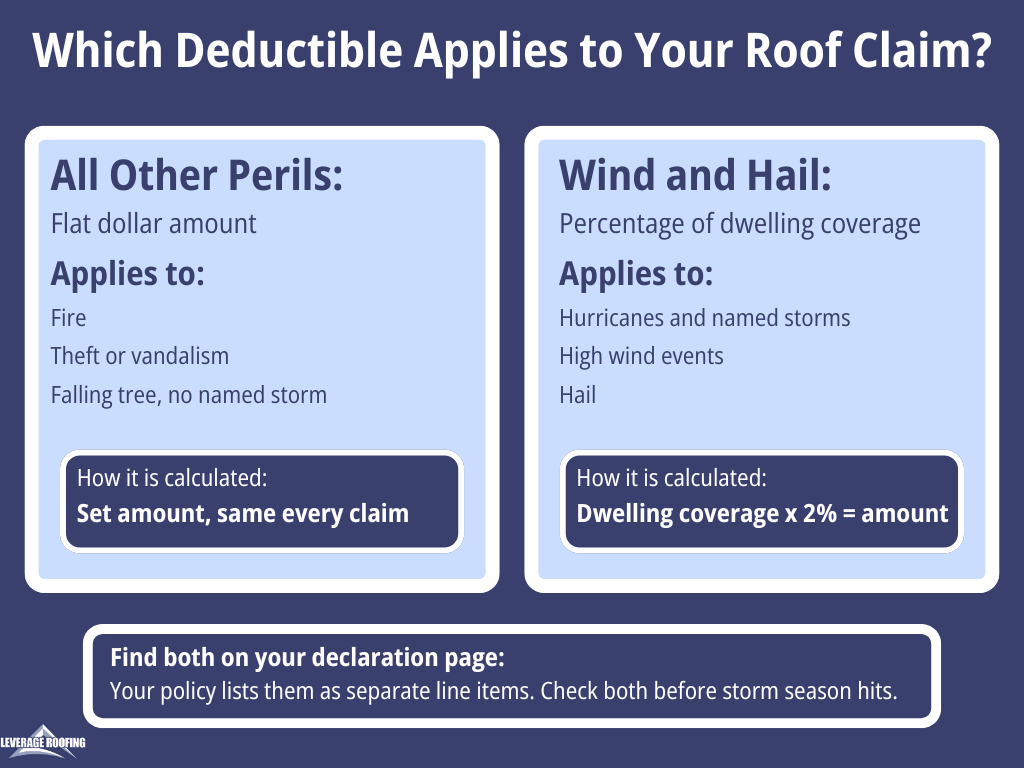
Your deductible is the amount you pay before coverage begins. Many policies carry a separate wind and hail deductible calculated as a percentage of your home’s insured value rather than a flat dollar amount. That percentage deductible applies only to named storms or wind events, which is why some homeowners call it a split deductible. Review both numbers on your policy before storm season.
What Else Might You Owe?
- Depreciation holdback: Replacement cost policies often pay the depreciated amount first and release the rest after the work is finished and invoiced.
- Upgrades beyond the scope: Choosing a better material than what was there means paying the difference yourself.
- Code compliance work: Some carriers include ordinance and law coverage for required code upgrades, while others do not.
Leverage Roofing: Your Partner in Insurance Roof Replacement
An insurance claim is stressful enough without learning the process from scratch. Leverage Roofing has been guiding Grand Strand homeowners through storm damage claims for years, backed by more than 30 years of construction experience and family ownership rooted right here in Murrells Inlet.
Our team starts with a free roof inspection and honest assessment of what we find. From there, we handle the documentation, meet with your insurance adjuster, and communicate directly with your insurance company so you are not stuck chasing paperwork.
If a storm hits your home, do not wait for the next one. Schedule your free inspection and let our team look at your roof today.
Frequently Asked Questions
Does homeowners insurance cover a full roof replacement?
Yes, homeowners insurance covers a full roof replacement when a covered event such as wind, hail, fire, or a fallen tree damages the entire roof beyond repair. If only one slope or section is damaged, the insurance company usually pays for a repair instead. Your payout depends on whether you carry replacement cost or actual cash value coverage.
How old is too old for roof insurance coverage?
Most carriers begin restricting roof coverage once a roof reaches 15 to 20 years old. At that point, many policies switch from replacement cost to actual cash value, which pays the depreciated value instead of the cost of a new roof. Some insurers decline to renew coverage on roofs older than 20 years.
Will filing a roof insurance claim raise my premium?
A single claim from a widespread storm often has less effect than a claim from an isolated incident. Multiple claims in a short period are more likely to affect your premium or your renewal. Ask your insurance agent how a claim would apply to your policy before filing.
How long do I have to file a roof damage claim?
Most homeowners insurance policies require prompt notice, and many carriers set a filing window of one to two years from the date of loss. The exact deadline appears in your policy documents. Reporting within days of the storm gives your claim the strongest support.
Should I get a roof inspection before calling my insurance company?
Yes, a professional inspection from a licensed roofing contractor tells you whether the damage is worth filing on before you open a claim. The inspection report and photos also give the adjuster clear evidence to work from. Leverage Roofing provides free roof inspections throughout the Grand Strand.