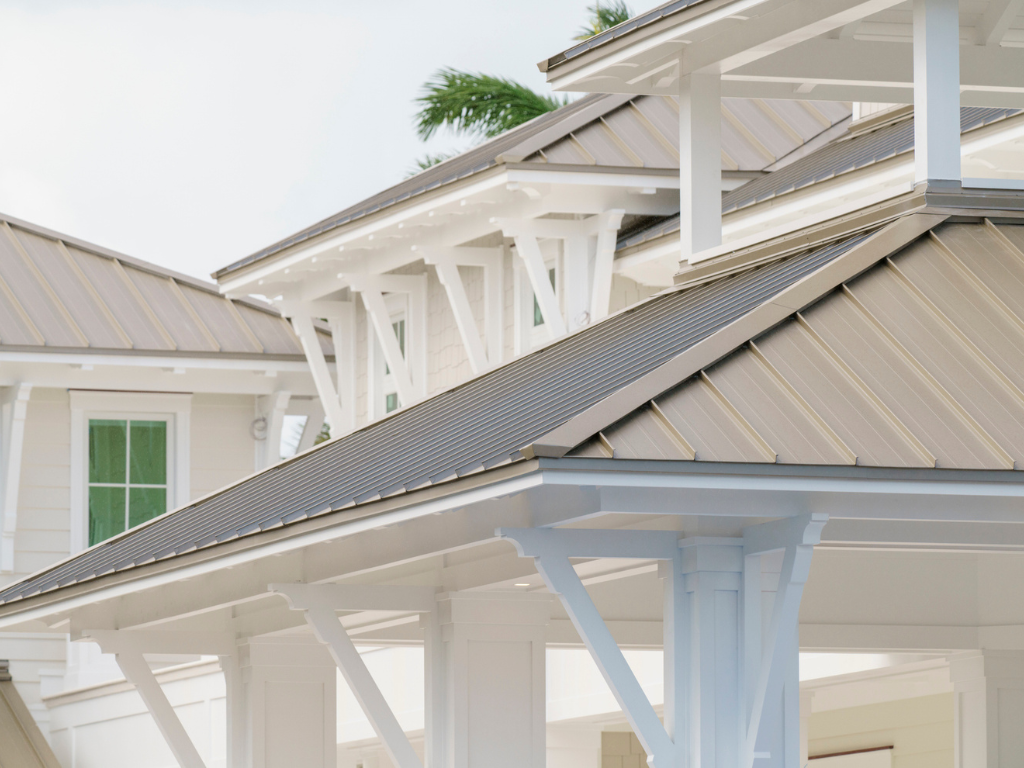
The Short Answer: Metal roofs last longer and cost more upfront, while asphalt shingles are more affordable and widely used. The right choice depends on your budget, how long you plan to stay in your home, and the weather conditions in your area.
For homeowners, getting this decision right means fewer repairs down the road and better protection for your home. This guide breaks down the real differences between these two popular options so you can make a confident choice.
Comparing the Two Most Popular Roofing Materials
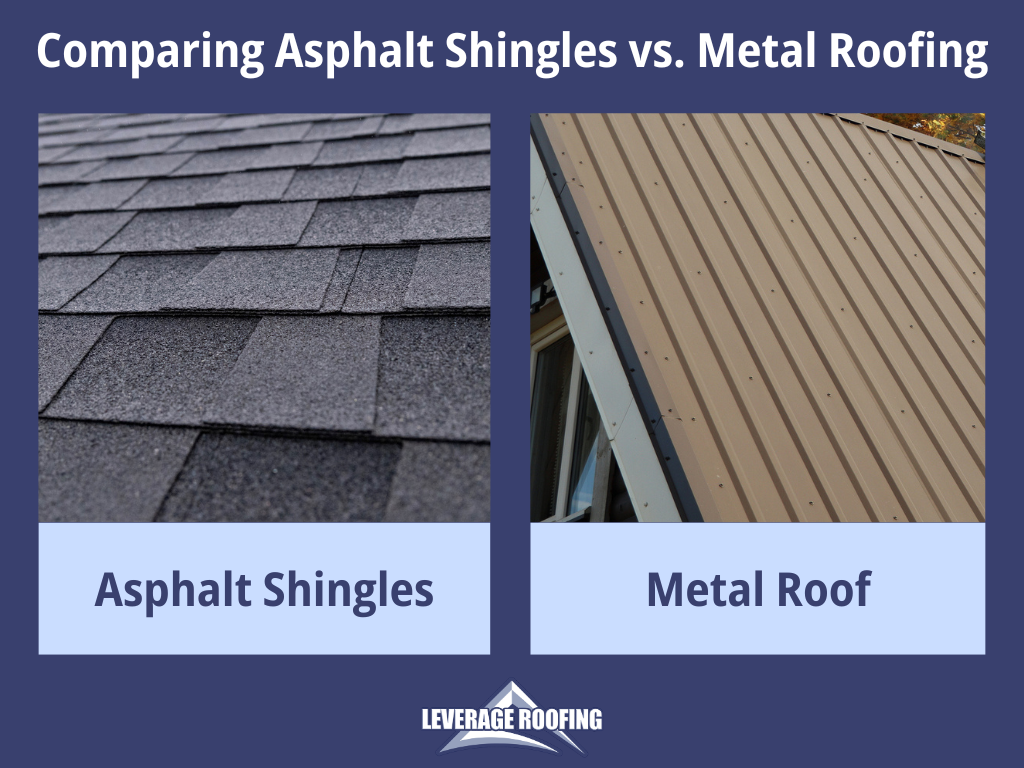
Asphalt shingles cover the majority of residential homes across the United States. They have been the go-to roofing material for decades because of their lower initial investment, wide availability, and straightforward installation. Metal roofing has grown steadily in popularity, especially in regions that face high winds, heavy snow, and severe weather year after year.
Both are proven roofing materials. Here is a quick side-by-side comparison to set the stage:
| Feature | Metal Roof | Asphalt Shingles |
|---|---|---|
| Lifespan | 40 to 70 years | 15 to 30 years |
| Initial Cost | Higher upfront | Lower upfront |
| Maintenance Costs | Minimal | Moderate |
| Energy Efficiency | Strong (reflective) | Moderate |
| Wind Resistance | Excellent | Good (varies by grade) |
| Style Options | Moderate | Very wide variety |
Metal roofing rewards homeowners who plan to stay in their home for the long haul. Asphalt shingles offer more flexibility for those working with a tighter budget or a shorter ownership timeline. Neither is the wrong answer. The best roofing material depends on your specific situation.
Performance and Durability in Tough Weather
Metal Roofing in Extreme Conditions
Metal roofs handle extreme weather conditions well. Standing-seam metal and fastener panel systems resist high winds by interlocking tightly and reducing the surface area that wind can catch. In areas with heavy snow, metal panels shed accumulation quickly instead of holding the load against your structure.
Metal roofing also performs well in coastal environments. It does not absorb moisture, will not rot, and holds up against salt air better than many other roofing materials. With proper maintenance, a metal roof can last two to three times longer than a standard asphalt shingle roof.
One thing to plan for: metal roofing materials expand and contract with temperature changes. Quality installation with proper fasteners and seam panels accounts for this movement, preventing issues over the long term.
Asphalt Shingles in Tough Conditions
Asphalt shingles perform well under most weather conditions. Architectural shingles and dimensional shingles offer better wind resistance than standard asphalt shingles, with many products rated for strong winds up to 130 mph.
Mineral granules on the shingle surface protect against UV damage. Those granules wear away gradually, which shortens the shingle lifespan in climates with intense sun and humidity. In coastal climates, traditional asphalt shingle roofs can deteriorate faster due to salt air and sustained moisture exposure. Choosing higher-grade architectural shingles and staying current with proper maintenance can meaningfully extend your asphalt shingle roof’s life.
It is also worth noting that asphalt shingles are lighter than most metal roofing systems. For homes where the existing roof structure is not built to handle added weight, asphalt shingles can make the most practical sense.
Cost, Long-Term Value, and Energy Savings
This table covers the main factors building owners weigh when selecting a commercial roofing system.
Initial Investment vs. Lifetime Cost
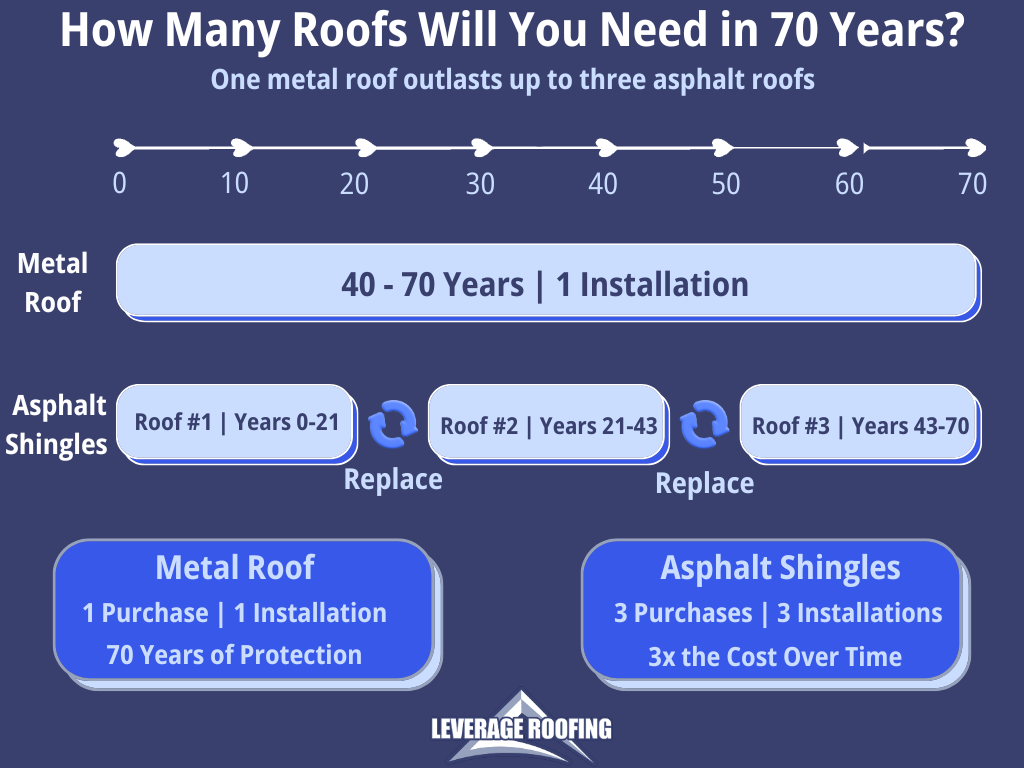
Metal roof installation costs more upfront than an asphalt roof. Labor costs are also higher because working with metal roofing materials requires more specialized skill and time. Per square foot, metal roofing typically runs two to three times more than asphalt shingles at installation.
The long-term value calculation looks different. An asphalt shingle roof may need full roof replacement one or more times in the same timeframe a metal roof covers. When you factor in maintenance costs and roof replacement over several decades, metal roofing often delivers stronger long-term savings for homeowners who stay put.
Energy Efficiency and Added Value
Metal roofs reflect heat rather than absorbing it, which can lower energy costs during warm months. With proper insulation beneath the metal panels, those energy savings become even more noticeable. Asphalt shingles absorb more heat by comparison, which puts additional demand on your cooling system during summer.
Metal roofing pairs well with solar panels. Its smooth, durable surface makes mounting systems more secure than an aging asphalt shingle roof would allow. Some insurance companies offer lower premiums for metal roofs because of their performance in severe weather. It is worth asking your insurance company whether that applies to your policy.
Metal roofing can also appeal to potential buyers who want a home with fewer maintenance costs on the horizon. That long-term value is worth considering when weighing your initial investment.
Which Roofing Material Is Right for Your Home?
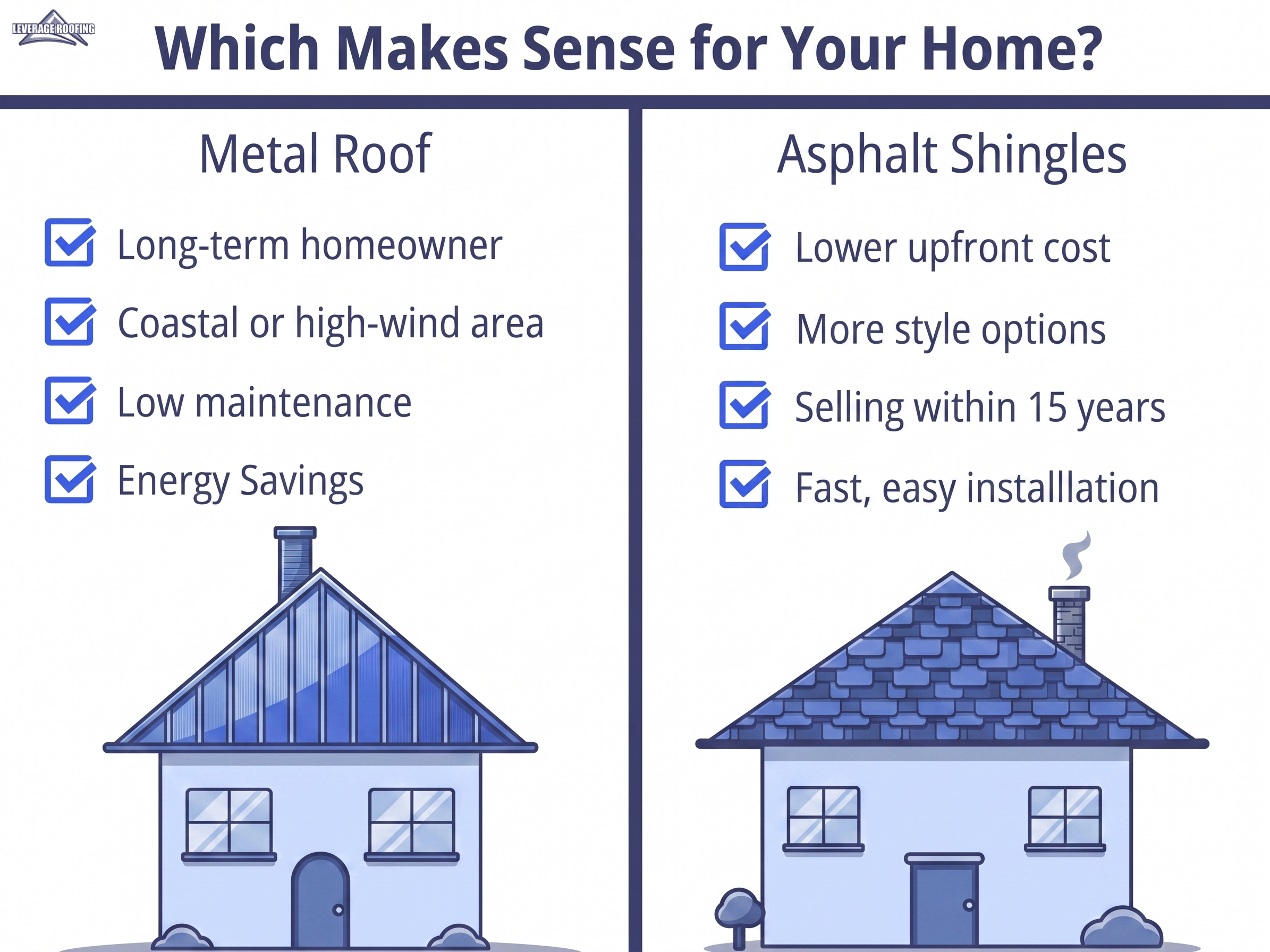
There is no universal right answer here. The best roofing material depends on your priorities and your situation. Below are the clearest indicators for each option.
Metal Roofing May Be the Better Fit If:
- You plan to stay in your home long-term: Metal roofing’s extended lifespan means you likely will not face another roof replacement during your time there.
- You live in a coastal or high-wind area: Metal roofing’s resistance to extreme weather conditions makes it well-suited for storm-prone regions like the Grand Strand.
- You want to reduce maintenance costs over time: Metal requires fewer repairs and less upkeep than asphalt over its full lifespan.
- Energy savings matter to you: The reflective properties of metal help offset energy costs, especially during hot coastal summers.
An Asphalt Shingle Roof May Be the Better Fit If:
- You want a lower initial investment: Asphalt shingles cost less to purchase and install, making them accessible for more budgets.
- You prefer more style variety: Asphalt shingles come in a wide range of colors, profiles, and textures to suit any home.
- You plan to sell your home within 10 to 15 years: A new asphalt shingle roof is a familiar choice that appeals to a broad range of potential buyers.
- Your existing roof needs a straightforward replacement: Asphalt is faster and easier to install on most residential homes.
What About Metal Shingles?
Metal shingles offer a middle ground worth considering. They look similar to traditional asphalt or dimensional shingles but are made from metal roofing materials. You get the durability and low maintenance of metal with a more familiar, traditional appearance. Metal shingles can be a strong option for homeowners who want improved performance without a dramatic change in the look of their roof.
Leverage Roofing: Your Partner in Metal and Shingle Roofing
Choosing between a metal roof and an asphalt shingle roof is one of the more significant decisions a homeowner makes. Your budget, location, timeline, and priorities all shape the right answer. There is no shortcut to getting it right.
At Leverage Roofing, we have helped homeowners across the Grand Strand and coastal South Carolina work through this decision for over 30 years. Our team provides free inspections, honest assessments, and direct support with the insurance claim process when storm damage is involved.
Ready to find out which roofing material is the right fit for your home? Schedule your free inspection with Leverage Roofing today.