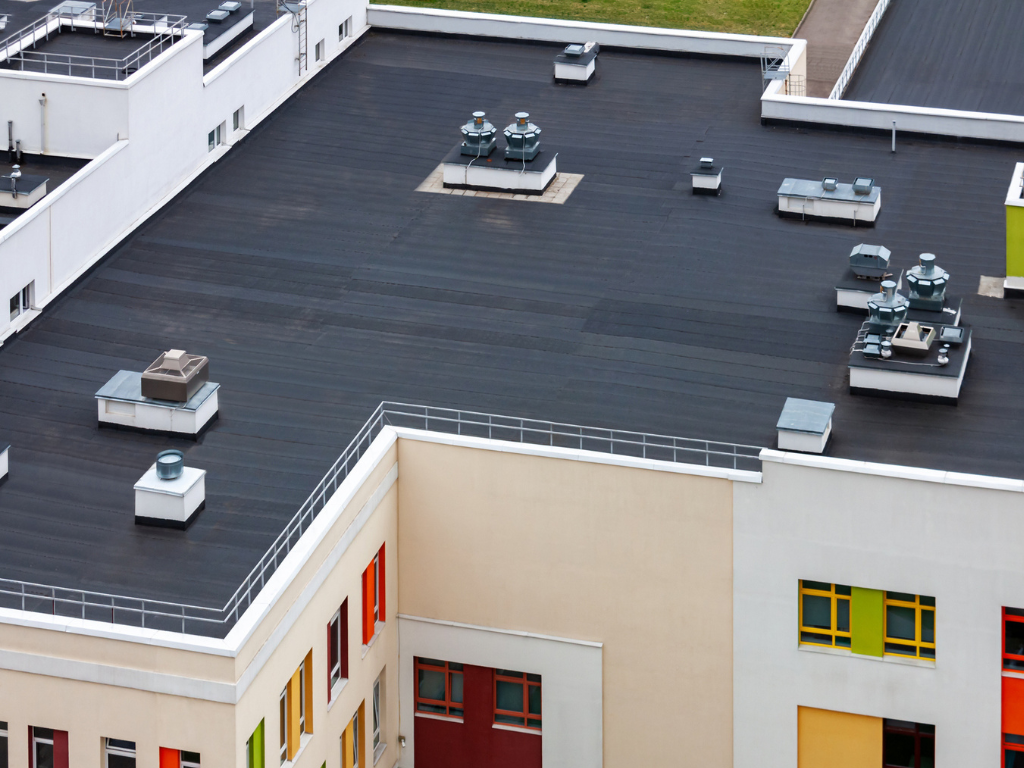
The Short Answer: A built up roof (BUR) is a multi-layered roofing system designed for flat and low-slope roofs. It uses alternating layers of bitumen and reinforcing ply sheets to create a durable, waterproof barrier that protects commercial buildings, warehouses, and some residential properties.
Built up roofing has been around for over a century, making it one of the oldest and most trusted flat roof systems still in use today. If you own or manage a property with a flat or low slope roof, understanding how a built-up roof system works can help you make smarter decisions about installation, maintenance, and long-term protection. This guide covers the components, benefits, installation process, and upkeep that building owners should know.
How a Built Up Roofing System Is Constructed
A built-up roofing system gets its name from the way it is literally “built up” from multiple layers. Each layer serves a specific purpose, and together they form a strong, long-lasting roof membrane. Here are the main components of a typical BUR system.
Layers and Materials
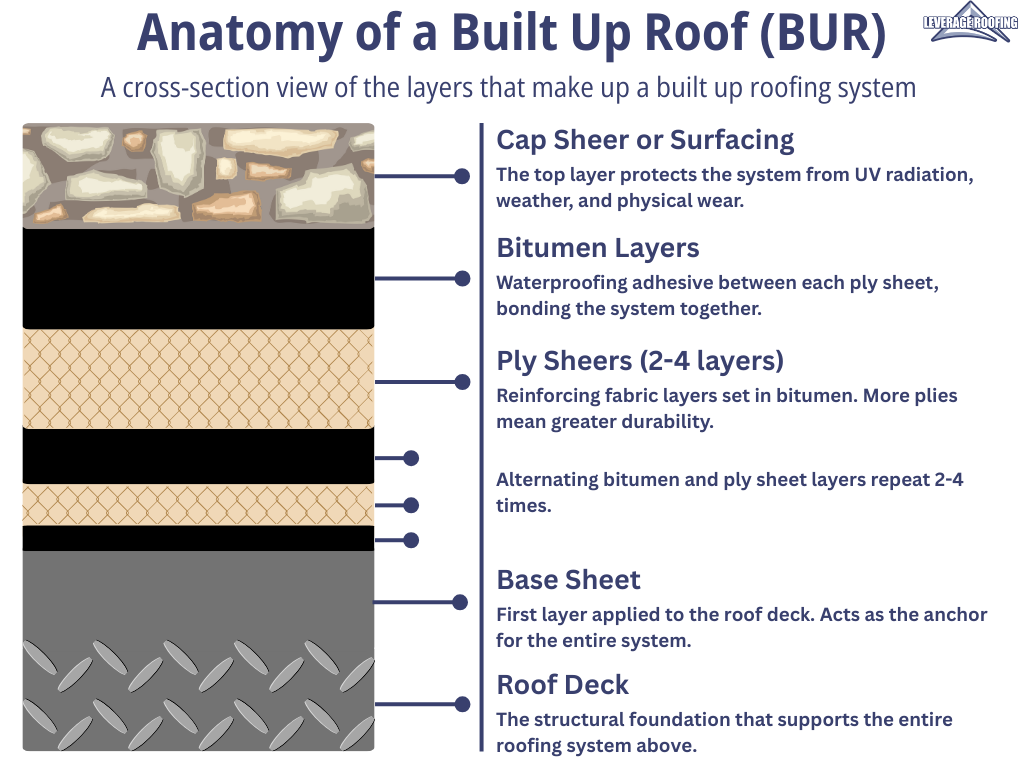
- Roof Deck: The roof deck is the structural foundation. It is typically made of metal, concrete, or wood and provides the base that supports the entire roofing system.
- Base Sheet: The base sheet is the first layer applied directly to the roof deck. It acts as an anchor point for the rest of the system and is typically fastened mechanically or adhered with adhesive.
- Ply Sheets: These reinforcing fabric layers are made from fiberglass or organic felt. Most BUR roofs include two to four ply sheets, and each one is set in a layer of bitumen to bond it to the layer below.
- Bitumen Layers: Each layer of bitumen acts as the waterproofing adhesive between ply sheets. Bitumen can be applied as hot asphalt, coal tar, or cold-applied adhesive, depending on the project requirements.
- Cap Sheet or Surfacing: The top layer protects the system from UV radiation, weather, and physical wear. Common options include a mineral cap sheet coated with mineral granules, a gravel surface, or a reflective roof coating.
The number of layers can vary based on building needs and local climate. More layers generally mean greater durability and a longer service life.
Benefits of a Built Up Roof
Built up roofs have remained popular for good reason. Their layered construction offers several advantages for flat and low-slope roof applications.
Waterproofing and Durability
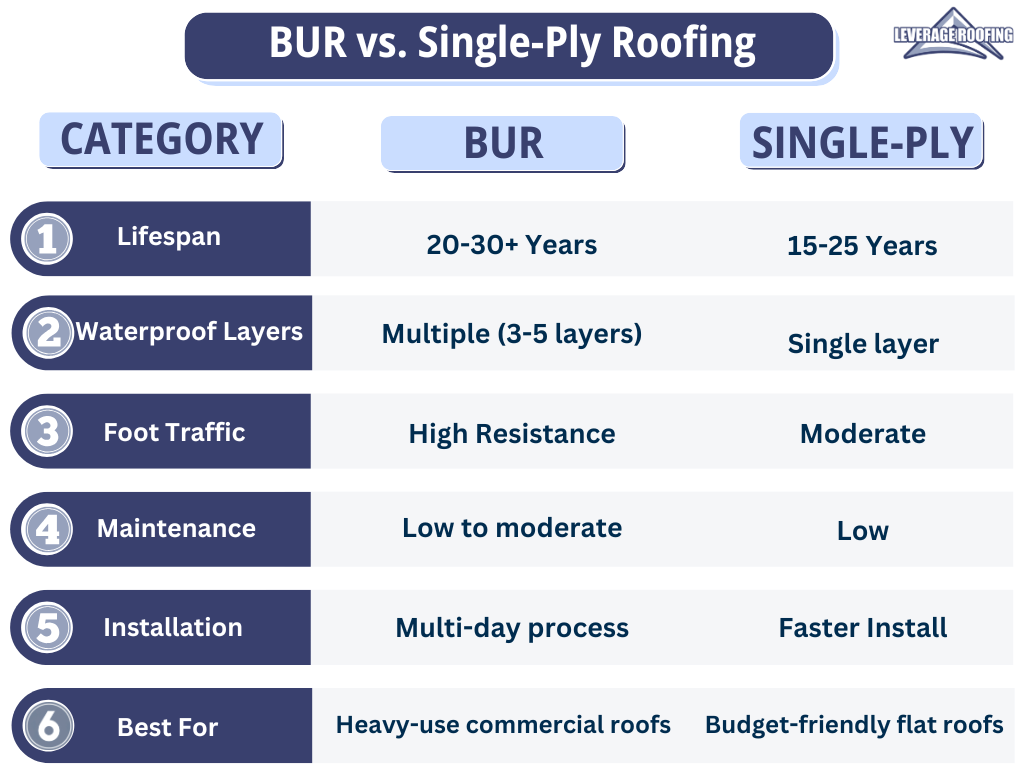
The multiple layers in a BUR system create redundant waterproofing capabilities. If one layer is compromised, the layers beneath still provide protection against water damage. This built-in redundancy gives building owners added peace of mind, especially in areas prone to heavy rain or storms like the South Carolina coast.
UV Protection and Energy Efficiency
A reflective roof coating or light-colored mineral cap sheet can reduce heat absorption, lowering energy costs and cooling bills during hot summer months. The thermal resistance of a multi-layered bitumen membrane also helps regulate indoor temperatures. These factors contribute to improved energy efficiency and lower energy consumption over the life of the roof system.
Foot Traffic and Physical Resistance
Built up roofs offer high resistance to foot traffic, making them a practical choice for commercial buildings where HVAC technicians, maintenance crews, or other workers regularly access the rooftop. A gravel-surfaced BUR roof can handle regular foot traffic without the wear and tear that damages single-ply systems.
Long Service Life
With proper installation and regular upkeep, a BUR roof can last 20 to 30 years or more. Some well-maintained built up roofs have remained in service for over 40 years. The longevity depends on the number of layers, the quality of materials, and how consistently the roof is maintained.
Installation Process and Material Options
Understanding the installation process helps building owners know what to expect and why hiring experienced roofing professionals matters for a BUR system.
Hot-Applied vs. Cold-Applied Methods
The two primary installation methods differ based on how bitumen is applied between layers.
- Hot-Applied BUR: This traditional method uses heated hot asphalt or coal tar to bond ply sheets together. A layer of asphalt is mopped or spread across each ply sheet while hot, creating a strong, continuous bond as it cools. This method has a long track record but produces fumes during installation.
- Cold-Applied BUR: This newer approach uses cold-applied adhesive to bond the layers. It eliminates the need for heating kettles on-site, reduces fumes, and can be a safer option for occupied buildings. Cold-applied systems are growing in popularity for commercial roofing projects.
What to Expect During Installation
A typical BUR installation follows these general steps:
- The roof deck is inspected and prepared. Any damaged areas are repaired.
- The base sheet is secured to the roof deck.
- Alternating layers of bitumen and ply sheets are applied, building up to the desired thickness.
- The cap sheet or surfacing material is installed as the final protective top layer.
- Flashing and edge details are sealed to prevent leaks at transitions and penetrations.
The installation process typically takes several days depending on roof size and weather conditions. Proper installation by qualified roofing professionals is one of the biggest factors in how long a BUR roof will perform.
Maintenance and Common Concerns
A built up roof requires less maintenance than many other roofing systems, but it is not maintenance-free. Regular attention helps extend the service life and prevents small problems from becoming costly repairs.
Routine Maintenance Tips
- Schedule regular inspections: Have a roofing professional inspect your BUR roof at least twice a year and after major storms. Early detection of cracks, blisters, or ponding water can save significant repair costs.
- Keep drains clear: Clogged drains cause water to pool on flat roofs. Standing water adds weight and accelerates deterioration of the bitumen layers.
- Remove debris: Leaves, branches, and other debris trap moisture against the roof surface. Regular cleaning prevents moisture-related damage to the roofing material.
- Address repairs quickly: Small cracks or blisters in the bitumen layer can often be patched before they lead to leaks or water damage beneath the surface.
Common Issues to Watch For
Even durable BUR systems can develop problems over time. Watch for blistering or bubbling in the roof membrane, which indicates trapped moisture between layers. Cracking in the bitumen roof surface can occur after years of UV exposure and temperature changes. Ponding water that does not drain within 48 hours may signal drainage issues that need attention.
If you notice any of these signs, contacting a qualified roofing contractor for an inspection is the best next step.
Leverage Roofing: Your Partner in Roofing Solutions
A built up roof is a proven, reliable option for flat and low-slope properties that need long-lasting protection. With multiple layers of bitumen and reinforcing materials working together, a BUR system delivers strong waterproofing, UV protection, and the durability to handle regular rooftop access.
At Leverage Roofing, we bring over 30 years of construction experience to every project. As a family-owned company based in Murrells Inlet, South Carolina, we understand the challenges that coastal weather creates for local roofs. Our team provides free inspections, honest assessments, and quality workmanship backed by our Owens Corning Platinum Preferred Contractor certification. We also offer insurance claim support and financing options to make the process straightforward.
If you are considering a new roof or need an expert evaluation of your current roofing system, Schedule your free inspection today and let Leverage Roofing help you find the right solution for your property.