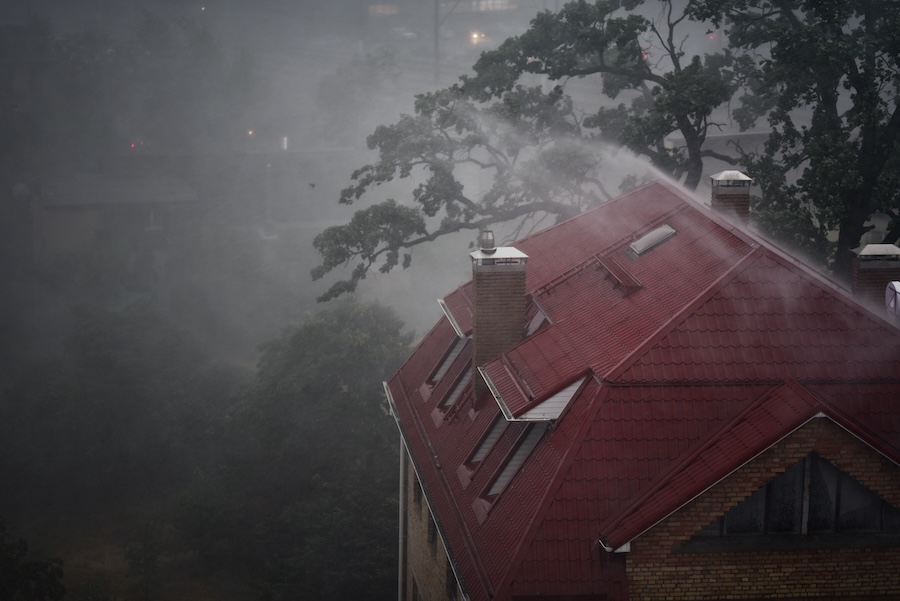
Living along the Carolina coast means enjoying beautiful beaches and warm weather, but it also means preparing for hurricane season. Can you truly hurricane-proof your roof? While no roof is 100% storm-proof, the right combination of materials, installation techniques, and maintenance can dramatically reduce your risk of hurricane damage.
A hurricane-proof roof requires three key elements: impact-resistant roofing materials (like metal roofing, concrete tiles, or clay tiles), proper installation with reinforced connections such as hurricane straps, and aerodynamic roof shapes like hip roof designs. Together, these features help your home withstand hurricane-force winds, torrential rain, and the extreme weather conditions common in hurricane-prone areas.
Choosing the Right Roofing Materials for Wind Resistance
The roofing material you select makes a significant difference in how well your home survives a tropical storm or hurricane. Different materials offer varying levels of wind resistance and protection.
Metal Roof Systems: Maximum Protection
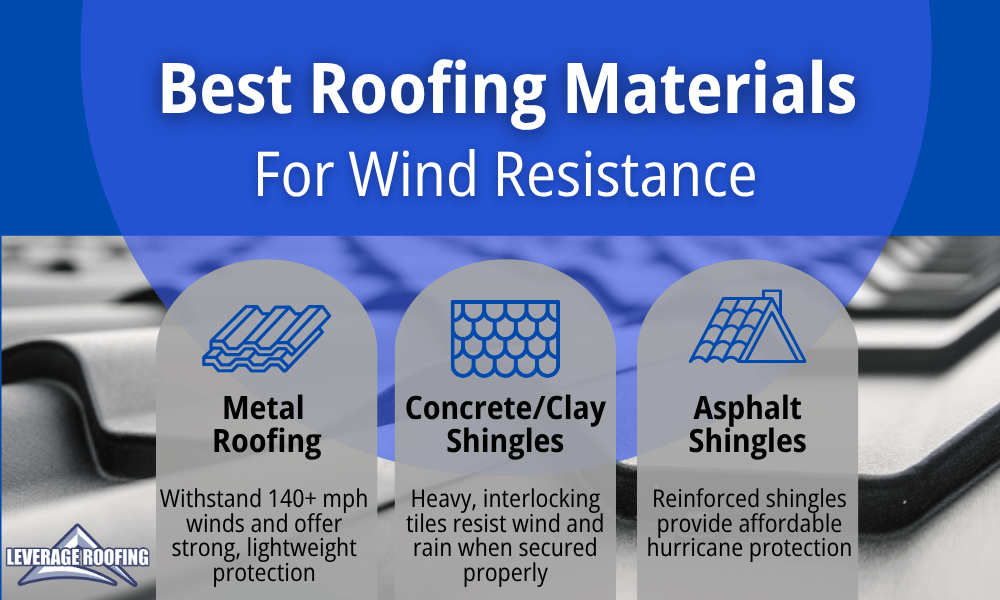
Metal roofing stands out as one of the best choices for hurricane-prone areas. A properly installed metal roof can withstand wind speeds exceeding 140 mph, far surpassing the requirements for most coastal areas. Metal roofing materials interlock tightly, leaving fewer vulnerable spots for high winds to exploit. They’re also lighter than tile options, which reduces stress on your roof deck and overall structure during severe storms.
Concrete Tiles and Clay Tiles
Tile roofs offer excellent hurricane resistance when installed correctly. Concrete tiles provide outstanding wind resistance and can handle the heavy rain and windsup to 125 mph that accompany severe weather conditions. Their weight and interlocking design help them stay secure during natural disasters. Both tile roof options require proper fastening to prevent individual tiles from becoming dangerous projectiles during hurricane-force winds.
Impact-Rated Asphalt Shingles
Modern asphalt shingles rated for high wind conditions can perform well in hurricane season. Look for shingles rated for winds of at least 110 mph. These specialized asphalt shingles use stronger adhesives and reinforced backing to resist uplift. While not as storm-resistant as metal or tile, quality asphalt shingles cost less upfront and still provide reasonable protection when properly installed.
Materials to Avoid
Wood shake roofs, while attractive, don’t offer the wind resistance needed in coastal areas. They’re more susceptible to water damage and can deteriorate faster in the humid conditions common to hurricane-prone areas. Likewise, older or less durable asphalt shingles can easily lift or crack under strong winds, leading to leaks and costly repairs.
Installation Features That Make a Difference
Even the best roofing material won’t protect your home if it’s not installed correctly. Several structural components work together to keep your roof attached during extreme weather conditions.
Hurricane Straps and Reinforced Connections
Hurricane straps are metal connectors that anchor your roof to your home’s walls and foundation. These stainless steel brackets create a continuous load path, preventing strong winds from peeling your roof away from the structure. Building codes in many hurricane-prone areas now require these reinforcements, but older homes may need retrofitting.
Roof Shape: Hip Roof vs. Gable Roof
Your roof shape affects how wind flows over and around your home. A hip roof, which slopes on all four sides, performs better in hurricanes than a gable roof. Hip roof designs shed wind more effectively and have fewer vulnerable edges where high winds can catch and lift. Gable roofs, with their vertical end walls, create more surface area for winds to push against, increasing the risk of structural damage.
Flat roof designs require special attention in hurricane season. Water pooling becomes a bigger concern during torrential rain, and proper drainage systems become critical to prevent water damage.
Foundation Layers: Roof Deck and Underlayment
Your roof deck serves as the foundation for everything else. It must be properly attached with ring-shank nails or screws spaced according to building codes. The underlayment between your roof deck and roofing material provides a secondary barrier against heavy rain. Self-adhering membranes work better than traditional felt paper for preventing water intrusion during severe weather.
Protecting Vulnerable Points
The roof ridge represents one of the most vulnerable areas during hurricanes. Ridge vents and caps need extra reinforcement and proper sealing. Edges, valleys, and penetrations where pipes or vents exit the roof also need careful attention to prevent wind-driven rain from entering your home.
Preparing Your Roofing System for Hurricane Season
Regular maintenance and preparation help your roof perform when severe storms arrive. A proactive approach can prevent minor issues from becoming costly repairs after a natural disaster.
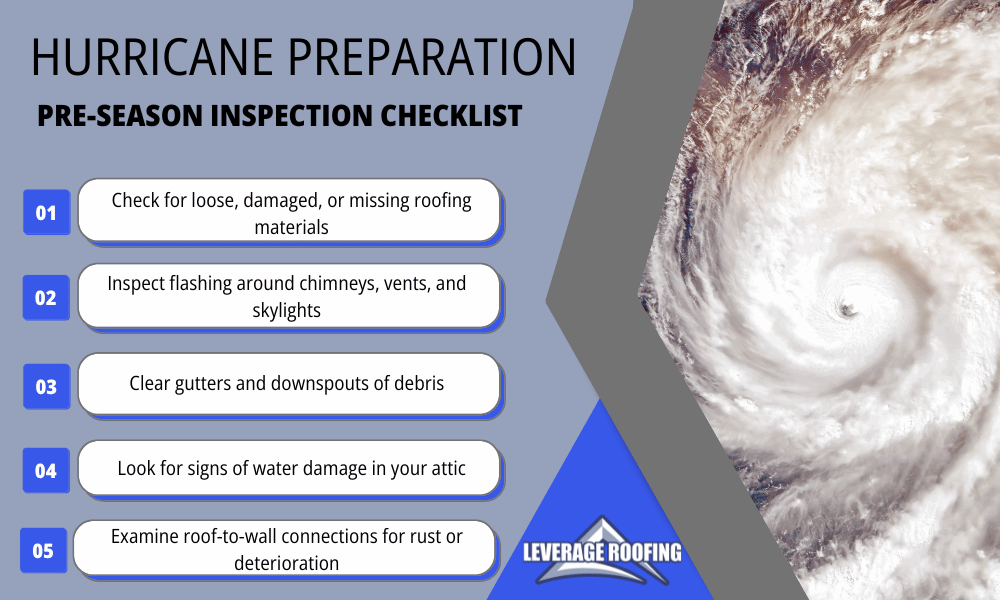
Pre-Season Inspection Checklist:
- Check for loose, damaged, or missing roofing materials
- Inspect flashing around chimneys, vents, and skylights
- Clear gutters and downspouts of debris
- Look for signs of water damage in your attic
- Examine roof-to-wall connections for rust or deterioration
- Verify that hurricane straps remain secure
Proper Maintenance Practices
Your roofing system needs attention throughout the year, not just before hurricane season. Trim overhanging tree branches that could damage your roof during strong winds. Address minor roof damage promptly before it becomes a weak point during the next tropical storm. Remove algae or moss growth that can deteriorate roofing materials over time.
Warning Signs That Need Immediate Attention
Some issues signal potential damage that could worsen during a hurricane:
- Sagging areas that indicate structural damage
- Curling or buckling shingles on asphalt roofing
- Rust spots on metal roofing
- Cracked or loose tiles on tile roofs
- Daylight visible through the roof deck from inside your attic
- Water stains on interior ceilings or walls
Working With Your Insurance Company
Document your roof’s condition before hurricane season arrives. Take photos and keep maintenance records. Many insurance companies offer discounts for homes with hurricane-resistant roofing systems or recent roof replacements. If you’re planning upgrades to improve hurricane resistance, check with your insurance company about potential premium reductions.
When severe weather is forecast, know how to quickly arrange emergency repairs if damage occurs. Having a plan prevents scrambling for help when everyone else is doing the same.
Professional Hurricane-Resistant Roofing Solutions in the Carolinas
Protecting your home from hurricane damage requires expertise, quality materials, and professional installation. The difference between a roof that survives a hurricane and one that fails often comes down to proper installation techniques and local knowledge of weather patterns in hurricane-prone areas.
Key factors in a hurricane-proof roof:
- Professional assessment of your home’s specific vulnerabilities
- Quality roofing materials rated for high wind speeds
- Proper installation following or exceeding building codes
- Regular inspections and maintenance
- Quick response for emergency repairs when needed
Local Expertise Matters
Roofing contractors familiar with Carolina coastal areas understand the specific challenges homes face during hurricane season. They know local building codes, common failure points, and which roofing materials perform best in this climate. A locally owned company also remains accessible after severe storms when out-of-town contractors have moved on.
Leverage Roofing: Your Partner in Storm Protection
Leverage Roofing brings professional expertise to homeowners throughout the Carolinas. As a family-owned business based in Murrells Inlet, South Carolina, we’ve helped countless homeowners prepare for and recover from severe weather events.
Our services include:
- Metal roofing installation for maximum hurricane resistance and wind resistance
- Roof replacement with materials designed for hurricane-prone areas
- Insurance claim support to help you work with your insurance company after storm damage
- Professional inspections to identify potential damage before the next natural disaster
- Emergency repairs when severe storms cause unexpected roof damage
- Commercial and residential roofing for all property types
We understand that investing in a hurricane-resistant roof protects more than just your property. It protects your family, your belongings, and your peace of mind during hurricane season. Our team works directly with your insurance company to handle claim-related damage, reducing your stress during an already difficult time.
The office provides weekend and evening hours because we know that severe weather doesn’t follow a nine-to-five schedule. When you need help, we’re here to respond quickly.
Take Action Before the Next Storm
Don’t wait until a hurricane is approaching to think about your roof’s readiness. The best time to upgrade to a hurricane proof roof or address existing vulnerabilities is now, before the next tropical storm forms.
Whether you need a complete roof replacement with metal roofing, repairs to your existing roofing system, or just a professional assessment of your home’s hurricane resistance, taking action today prevents costly repairs tomorrow. Contact Leverage Roofing to schedule an inspection and learn how we can help protect your home from the next severe weather event.
Your home deserves protection that goes beyond basic roofing. It deserves a roofing system designed to withstand the specific challenges of living in the beautiful but weather-challenged Carolina coast.