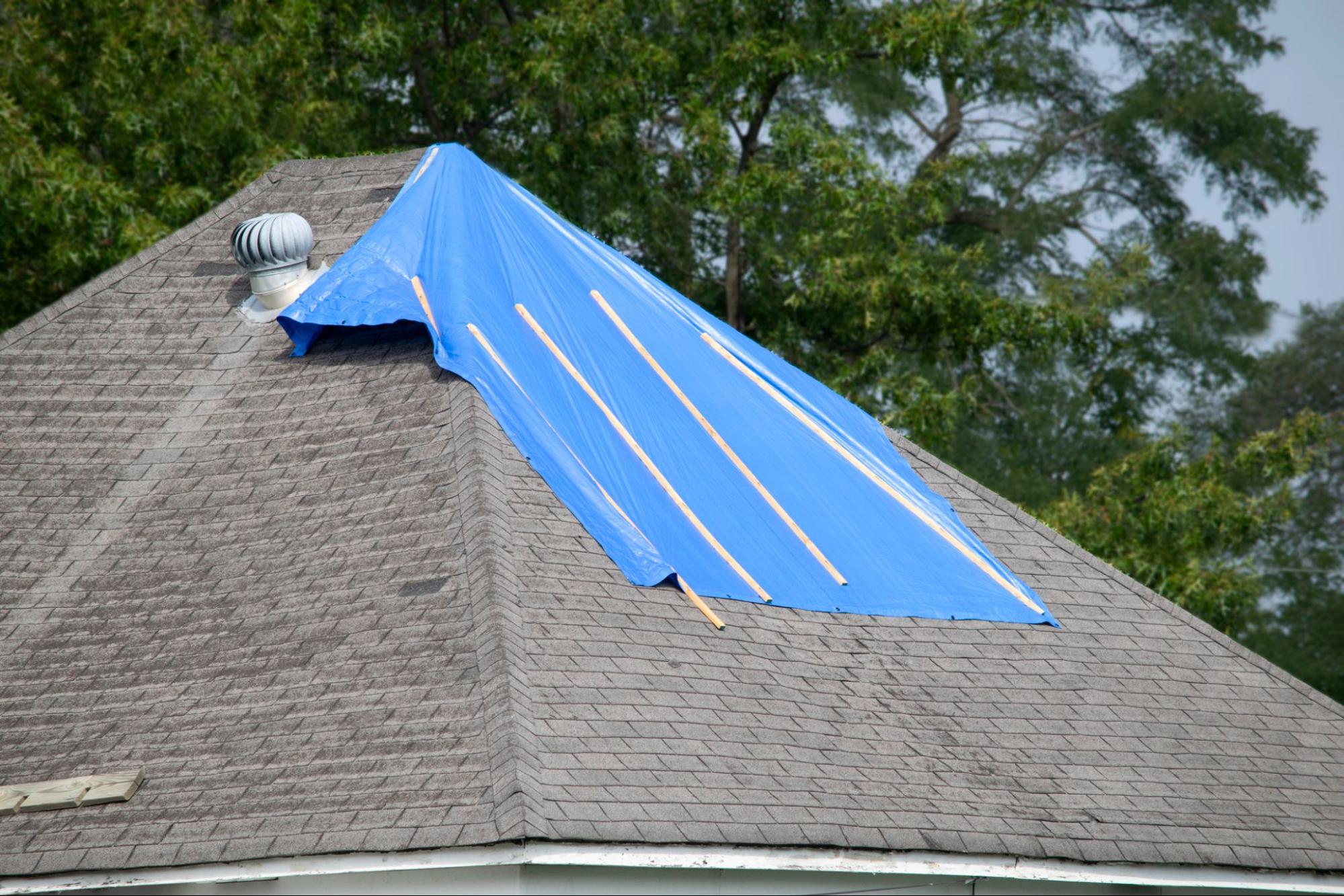
A water stain spreading across your ceiling or a drip during heavy rain signals something no homeowner wants to face: a roof leak. While the damage might seem minor at first, a leaking roof left unaddressed can lead to mold growth, structural damage, and costly repairs down the road.
Understanding how professional roofers approach roof leak repair helps you appreciate why this work requires expertise, specialized tools, and trained eyes. From finding the source of the leak to creating a watertight seal that protects your home for years to come, here’s what happens when you call in the pros.
Why Professional Roof Leak Repair Matters
A roof leak rarely announces its location conveniently. That water spot on your ceiling could originate from anywhere on your roof. Water travels along rafters, sheathing, and insulation before finally dripping through, making the entry point difficult to pinpoint without professional knowledge.
The Hidden Costs of Ignoring Leaks
What starts as a small drip can quickly become a major problem:
- Mold growth in attic spaces and wall cavities
- Rotted roof decking requiring expensive repairs
- Stained ceilings and walls throughout your home
- Electrical hazards if water reaches a light fixture or wiring
The repair cost for addressing a leak early is almost always far less than dealing with widespread water damage later.
Step One: Professional Roof Inspection
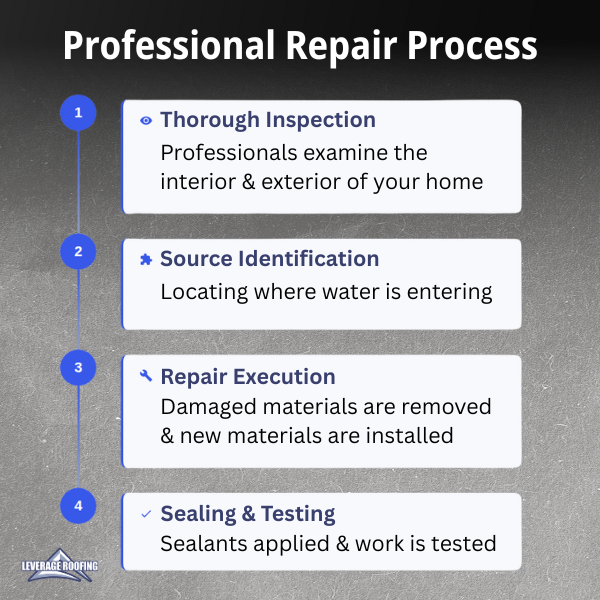
The first step in any roof leak repair is a thorough inspection. A professional roofer examines both the interior and exterior of your home to understand the full picture.
Interior Assessment
Inside your attic, roofers look for telltale signs of moisture intrusion. A soft spot in the decking indicates prolonged water exposure. Dark stains on wood framing show water’s travel path. During daylight, small gaps might appear as pinpoints of light, revealing potential entry points.
Exterior Examination
On the roof itself, inspectors look for common causes of leaks:
- Missing shingles or tiles that expose the underlayment
- Damaged flashing around chimneys, vents, and skylights
- Cracked or deteriorated roof sealant at seams
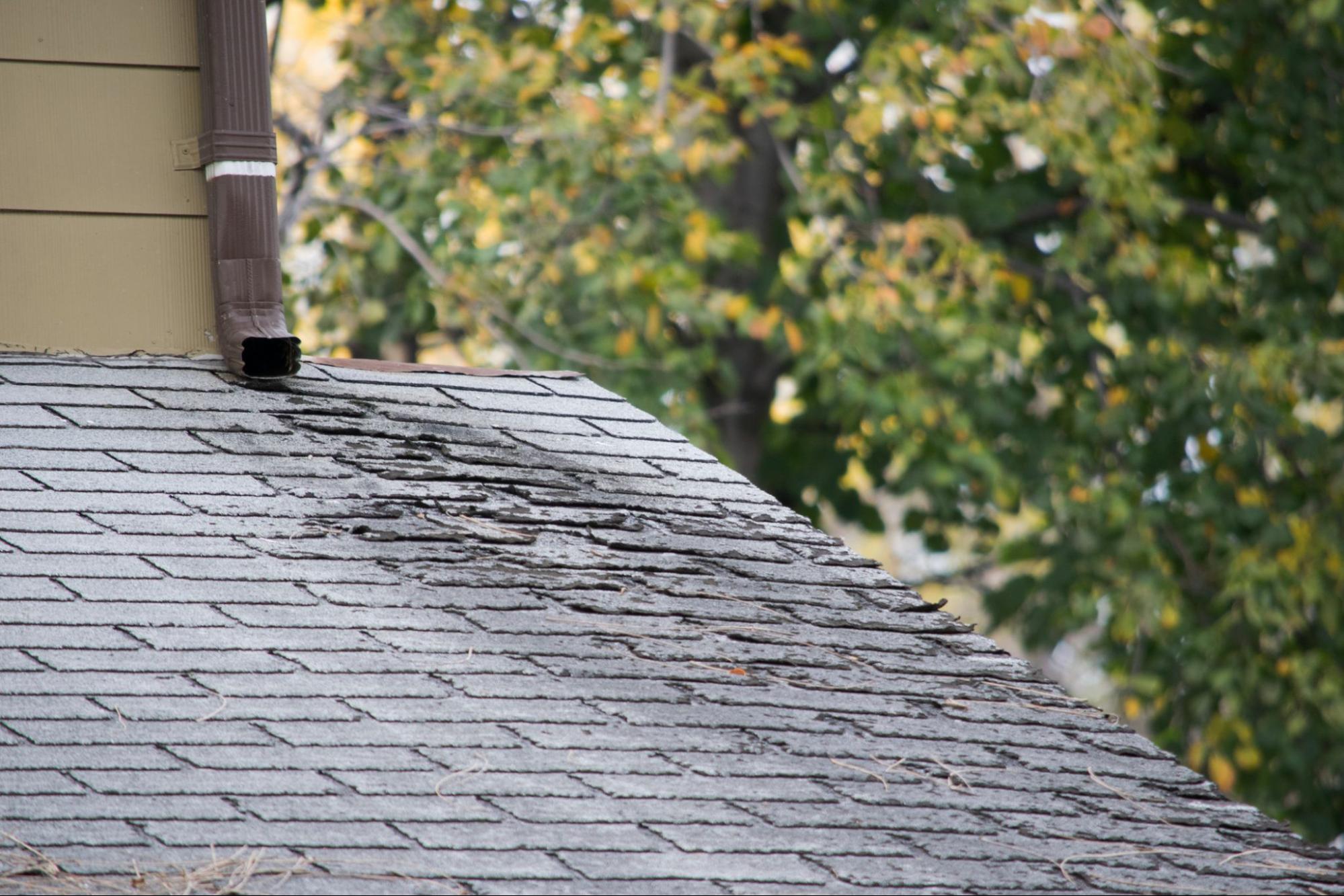
- Lifted or curled asphalt shingles
- Rust spots on metal roof panels or metal flashing
In coastal South Carolina, salt air and humidity accelerate wear on roofing materials. Inspectors familiar with local conditions know exactly where to look.
Step Two: Finding the Source of the Leak
Locating where water enters your roof requires detective work. The source of the leak is often far from where you see the damage inside. Water can travel along a vertical member or rafter for several feet before dripping down.
Common Leak Locations
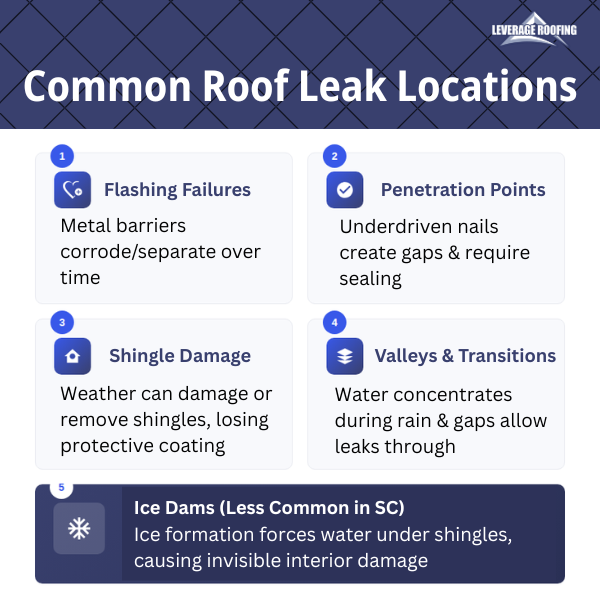
Flashing Failures: The metal flashing around your chimney, vent pipes, and skylights forms a barrier between different roof planes. When damaged flashing corrodes or separates, water finds its way in. A skylight leak is particularly common as seals degrade over time.
Penetration Points: Anywhere something passes through your roof creates a potential leak. Vent pipe boots, exhaust fans, and satellite mounts all require proper sealing. An underdriven nail that doesn’t sit flush can also create a gap for water entry.
Shingle Damage: Storm damage from wind or hail can crack, displace, or remove shingles. Even asphalt shingles that look intact might have lost their protective granule coating.
Valleys and Transitions: Where two roof planes meet, water concentrates during hard rain. Any gap in the valley system allows water through.
Ice Dams: Though less common in South Carolina, ice dam formation during rare freezing weather can force water under shingles.
Step Three: Preparing for Repair
Once the source of the leak is identified, professional roofers prepare the work area and gather appropriate materials for your specific type of roof. The roofing material on your home determines the repair approach. Metal roof repairs differ significantly from asphalt shingle work.
Before repairs begin, professionals check for secondary damage. A nail head that’s rusted through might indicate widespread moisture problems. Soft spots near the leak area suggest the roof decking needs replacement.
Step Four: The Repair Process
Professional roof leak repair follows systematic steps to ensure lasting results.
Replacing Damaged Materials
If missing shingles caused your leak, the repair involves more than adding new ones. Roofers carefully remove surrounding materials to access the underlayment, check for water damage to the decking, replace any compromised sections, and install new shingles with proper overlapping and nail placement.
Each roofing nail must be driven correctly. An underdriven nail or one placed wrong can itself become a future leak source.
Repairing Flashing
Damaged flashing requires either repair or complete replacement. New flashing gets installed using roofing cement and proper overlap techniques. For vent pipe boots, professionals either seal cracks if minor or install entirely new boots with proper roof sealant application.
Sealing and Testing
After physical repairs, roofers apply appropriate sealants to seal cracks and ensure every seam creates a watertight seal. Quality contractors test their work to verify the repair holds.
When Repair Isn’t Enough
Sometimes a professional inspection reveals that repair isn’t the most cost-effective solution. Multiple leaks, widespread storm damage, or an aging roof might indicate that roof replacement makes more financial sense.
A trustworthy roofer provides honest recommendations. If your leak resulted from storm damage, insurance claim assistance can help you navigate the process.
Protecting Your Roof Going Forward
After repairs, maintaining your roof prevents future leaks:
- Schedule regular roof inspections, especially after severe weather
- Keep gutters clean to prevent water backup
- Trim overhanging tree branches
- Address minor issues before they become major problems
Trust Your Roof to Local Experts
When you notice water damage, waiting only makes the problem worse. A professional roofer can locate your leak, assess all related damage, and perform repairs that restore your roof’s protective function.
Leverage Roofing brings over 30 years of construction experience to every roof leak repair. As a family-owned company based in Murrells Inlet, we understand the specific challenges South Carolina weather presents to local roofs. Our team provides free roof inspections to identify problems and honest recommendations on the best path forward.
From minor repairs to complete roof replacement, we handle every aspect of the work with professionalism and care. We also work directly with your insurance company when storm damage is involved, reducing your stress during an already difficult situation.
Don’t let a small leak become a major headache. Contact Leverage Roofing today to schedule your free inspection and protect your home from water damage.